Червячный редуктор серии RV / Синхронный червячный редукторный двигатель для винтового домкрата

Червячный редуктор серии RV, десять стандартных типоразмеров RV025–RV150, межосевое расстояние 25–150 мм. Номинальная мощность 0,06–15 кВт. Алюминиевый корпус на малых рамах, чугунный на RV110–RV150 для обеспечения высокого крутящего момента. Самоблокировка при передаточном числе 20:1 и выше — отдельный тормоз не требуется для вертикальных винтовых домкратов и подъемных работ. Прямой монтаж двигателя по стандартам IEC и NEMA, совместимость с серводвигателями.
Червячный редуктор серии RV — от RV025 до RV150, с прямым подключением к двигателю.
Серия RV червячный редуктор Корейская компания EverPower выпускает десять стандартных типоразмеров — от RV025 до RV150 — с межосевым расстоянием от 25 мм до 150 мм. Номинальная входная мощность начинается с 0,06 кВт у компактного RV025 и достигает 15 кВт у RV150, что делает это семейство продуктов универсальным, охватывающим диапазон применения от легких конвейерных приводов до тяжелых синхронных систем в строительных опалубочных установках и промышленных винтовых домкратах.
Корпус червячной передачи изготовлен из литого алюминиевого сплава на моделях RV025–RV090, а на моделях RV110–RV150, где больший крутящий момент требует большей жесткости корпуса, используется чугун. Для моделей RV110–RV150 также доступен вариант корпуса из нержавеющей стали, предназначенный для работы в условиях мойки или агрессивных сред. В зависимости от конкретных требований к нагрузке и скорости на момент заказа, в червячном колесе используется оловянная (станковая) бронза или алюминиевая бронза.
Стандартные передаточные числа варьируются от 5:1 до 100:1. Все рамы допускают использование фланцев двигателя, соответствующих стандартам IEC, для прямого соединения — наиболее распространенной конфигурации для упаковочных линий, конвейеров пищевой промышленности и синхронных приводов винтовых домкратов, где несколько устройств работают на общем валу или синхронно с одним сигналом управления двигателем.
Технические характеристики
В приведенной ниже таблице конфигурации указаны материал корпуса, материал вала, варианты входа/выхода, способы установки, тип смазки и диапазон передаточных чисел. В следующей таблице параметров модели указаны конкретные диаметры валов и диапазон мощности для каждого типоразмера рамы автодома — используйте эти данные при проверке совместимости вала двигателя и муфты.
| Жилье | Редуктор из литого алюминиевого сплава (RV025–RV090) Чугунный редуктор (RV110–RV150) Редуктор из нержавеющей стали (RV110–RV150) |
| Червячное колесо | Износостойкий оловянно-бронзовый сплав, алюминиево-бронзовый сплав |
| Червячный вал | Сталь 20Cr, цементация, закалка, шлифовка; твердость поверхности 56–62 HRC; после прецизионной шлифовки остается цементированный слой толщиной 0,3–0,5 мм. |
| Входные конфигурации | Двигатель переменного тока / Тормозной двигатель / Двигатель постоянного тока / Серводвигатель (с прямым приводом) Фланец двигателя, соответствующий стандартам IEC |
| Применимые двигатели | Электродвигатели переменного тока и тормозные двигатели, соответствующие стандартам IEC; двигатели постоянного тока; серводвигатели. |
| Настройки вывода | Выходной вал с шпонкой и полым профилем; Полый вал с выходным фланцем; Выходной вал с цельным штепсельным соединением. |
| Параметры | Задний удлинитель червячного вала, одинарный выходной вал, двойной выходной вал, выходной фланец, рычаг крутящего момента, пылезащитный кожух |
| Установка | Крепление на фланце, крепление на опоре, крепление на рычаге крутящего момента |
| Смазка | Смазка консистентной смазкой; смазка в масляной ванне и разбрызгивание. |
| Охлаждение | Естественное охлаждение |
| Соотношение | 5, 7.5, 10, 15, 20, 25, 30, 40, 50, 60, 80, 100 |
Параметры модели — RV025–RV150
Все указанные ниже диаметры валов являются номинальными; фактические размеры подтверждаются на чертежах с указанием размеров, прилагаемых к заказу. Диаметры входных/выходных отверстий в скобках указывают на альтернативные размеры, доступные в рамках данной рамы.
| Модель | Номинальная мощность | Номинальное передаточное число | Входное отверстие Ø | Диаметр входного вала | Диаметр выходного отверстия | Диаметр выходного вала | Расстояние между центрами |
|---|---|---|---|---|---|---|---|
| RV025 | 0,06 кВт – 0,12 кВт | 5 – 60 | Φ9 | Φ9 | Φ11 | Φ11 | 25 мм |
| RV030 | 0,06 кВт – 0,25 кВт | 5 – 80 | Φ9 (Φ11) | Φ9 | Φ14 | Φ14 | 30 мм |
| RV040 | 0,09 кВт – 0,55 кВт | 5 – 100 | Φ9 (Φ11, Φ14) | Φ11 | Φ18 (Φ19) | Φ18 | 40 мм |
| RV050 | 0,12 кВт – 1,5 кВт | 5 – 100 | Φ11 (Φ14, Φ19) | Φ14 | Φ25 (Φ24) | Φ25 | 50 мм |
| RV063 | 0,18 кВт – 2,2 кВт | 7,5 – 100 | Φ14 (Φ19, Φ24) | Φ19 | Φ25 (Φ28) | Φ25 | 63 мм |
| RV075 | 0,25 кВт – 4,0 кВт | 7,5 – 100 | Φ14 (Φ19, Φ24, Φ28) | Φ24 | Φ28 (Φ35) | Φ28 | 75 мм |
| RV090 | 0,37 кВт – 4,0 кВт | 7,5 – 100 | Φ19 (Φ24, Φ28) | Φ24 | Φ35 (Φ38) | Φ35 | 90 мм |
| RV110 | 0,55 кВт – 7,5 кВт | 7,5 – 100 | Φ19 (Φ24, Φ28, Φ38) | Φ28 | Φ42 | Φ42 | 110 мм |
| RV130 | 0,75 кВт – 7,5 кВт | 7,5 – 100 | Φ24 (Φ28, Φ38) | Φ30 | Φ45 | Φ45 | 130 мм |
| RV150 | 2,2 кВт – 15 кВт | 7,5 – 100 | Φ28 (Φ38, Φ42) | Φ35 | Φ50 | Φ50 | 150 мм |
Как червячная передача в автодоме снижает скорость и увеличивает крутящий момент

Дом на колесах червячный редуктор Преобразует высокоскоростное вращательное движение от входного двигателя в низкоскоростное, высокомоментное выходное движение посредством перекрестно-осевого червячного зацепления. Вал червяка — винтовая резьба, прецизионно отшлифованная из стали 20Cr и закаленная до 56–62 HRC — входит в зацепление с червячным колесом под углом 90 градусов. Каждый полный оборот червяка перемещает колесо на один зуб, поэтому колесо с 40 зубьями и однозаходным червяком обеспечивает передаточное отношение 40:1.
Геометрия контакта представляет собой линейный контакт вдоль спирали червяка, а не точечный, как в косозубом зубчатом колесе. Это распределяет нагрузку по большей дуге, улучшая крутящий момент и распределение тепла по зацеплению зубьев. При передаточных числах 20:1 и выше с однозаходным червяком выходной вал самоблокируется под статической нагрузкой — свойство, которое устраняет необходимость в отдельном удерживающем тормозе на вертикальных винтовых домкратах, приводах ворот и вертикальных конвейерах.

Твердость поверхности червячного вала 56–62 HRC с остаточным цементированным слоем толщиной 0,3–0,5 мм после прецизионной шлифовки обеспечивает износостойкость контактной поверхности червяка даже при непрерывной циклической нагрузке, характерной для винтовых домкратов и систем с откидной опалубкой, где редуктор работает при многократном изменении направления нагрузки по мере подъема и возврата опалубки.
Почему серия RV предназначена для синхронных приводных систем?
✦ Десять стандартных размеров оправ — одна линейка продукции
Модели RV025–RV150 имеют единый дизайн. Когда система требует нескольких редукторов с различными значениями крутящего момента — как, например, в многоточечной системе винтовых домкратов — весь ассортимент поставляется одним поставщиком с одинаковой документацией и системой запасных частей.
✦ Весы из высококачественных материалов с указанием размера рамки
В рамах малого размера (RV025–RV090) используется легкий литой алюминиевый сплав. В рамах большого размера (RV110–RV150) применяется чугун для повышения жесткости корпуса, необходимой при крутящих моментах выше 1000 Нм. Компромиссов нет ни в одном из крайних вариантов.
✦ Самоблокирующийся выходной вал — тормоз не требуется при передаточном числе ≥ 20:1
Однозаходный червяк с передаточным отношением 20:1 и выше создает угол зацепления меньше угла трения, блокируя выходной вал и предотвращая обратное вращение. В винтовых домкратах и подъемных механизмах это означает, что груз удерживается в заданном положении при обесточивании двигателя — критически важное свойство безопасности, позволяющее избежать использования отдельного электромагнитного тормоза.
✦ Различные конфигурации выходного вала
Конструкция с полым валом со шпонкой, полым валом с выходным фланцем и цельным валом с возможностью вставки позволяет одной и той же модели редуктора подключаться к различным компонентам, расположенным ниже по потоку — ходовому винту, цепной звездочке, шкиву ремня или прямой фланцевой муфте — без использования специального адаптера.
✦ Возможность установки корпуса из нержавеющей стали на большие рамы
Модели RV110–RV150 выпускаются с корпусами из нержавеющей стали для использования в пищевой промышленности и в условиях мойки, где чугунные версии со временем подвергаются коррозии. Это расширяет область применения продукта в мясоперерабатывающей, молочной и фармацевтической отраслях.
✦ Совместимость с сервомоторами
Фланцы, соответствующие стандартам IEC, напрямую принимают лицевые панели сервомоторов. Для строительных опалубочных систем, требующих точной синхронизации между несколькими точками подъема, редукторы RV с сервомоторным приводом обеспечивают управление скоростью с обратной связью, чего невозможно достичь с помощью гидравлических систем при той же стоимости.
Где используется червячный редуктор серии RV
▸ Системы опалубки с винтовыми домкратами — Строительство
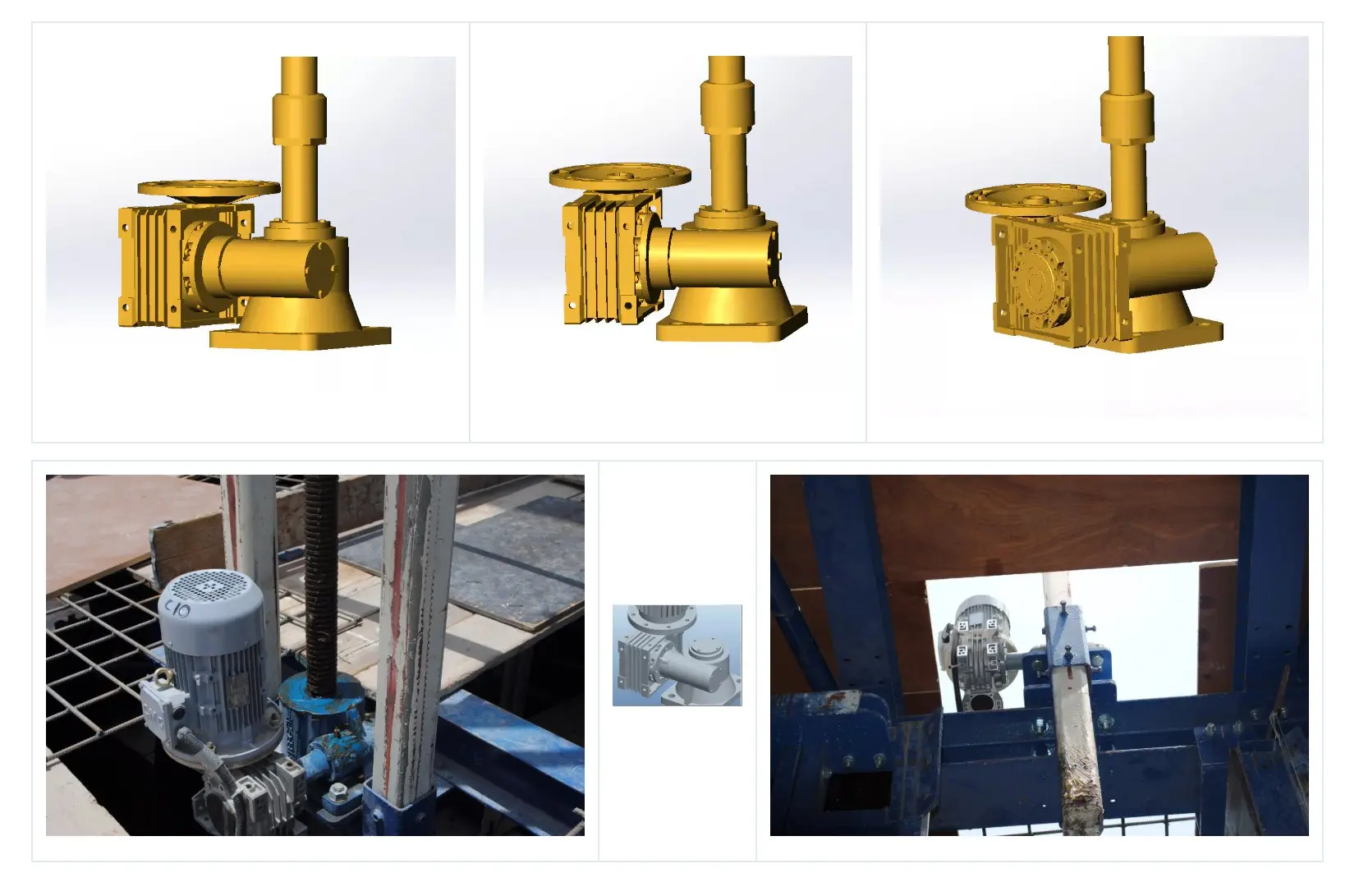
Система опалубки с винтовыми домкратами для высотных бетонных конструкций использует несколько винтовых домкратов, расположенных по периметру опалубки. Каждый домкрат должен выдвигаться и втягиваться синхронно — с точностью до нескольких миллиметров друг от друга — чтобы предотвратить деформацию опалубки. Серия RV червячный редуктор Соединяется напрямую с синхронным двигателем переменного тока или управляется сервоприводом в каждой точке крепления домкрата. Самоблокирующийся червячный механизм удерживает опалубку в нужном положении во время заливки бетона без постоянного питания двигателя. Типичная конфигурация: RV090 или RV110 с передаточным отношением 30:1–50:1, мощность двигателя 0,75–2,2 кВт на домкрат.

▸ Промышленные винтовые домкраты — многоточечный подъем
Многоточечные винтовые домкраты, используемые для подъема и позиционирования тяжелых промышленных грузов — плит прессов, оснований машин, систем зажима пресс-форм — требуют, чтобы все точки домкрата перемещались с одинаковой скоростью и останавливались с точностью до долей миллиметра. Общий карданный вал или синхронизированный сервопривод одновременно приводят в движение все редукторы RV. Встроенная самоблокировка червячной передачи защищает груз в случае отказа какого-либо отдельного привода во время подъема. RV110–RV150 с передаточным отношением 50:1–100:1 охватывает типичный диапазон крутящего момента для многоточечных домкратов грузоподъемностью от 5 до 50 тонн.
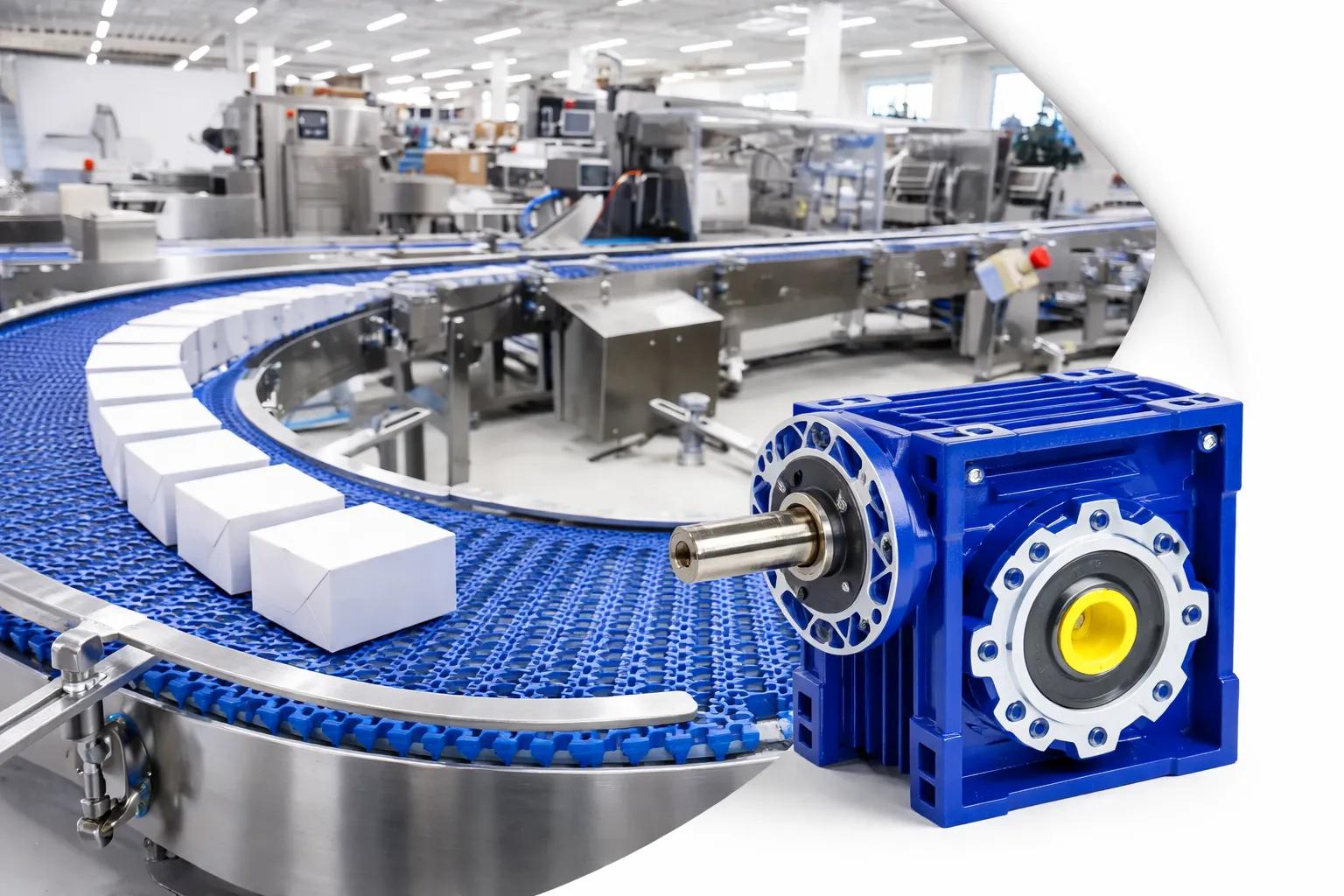
▸ Конвейерные линии для пищевой промышленности
В многозонных конвейерных системах — таких как туннель пастеризации с отдельными секциями конвейерной ленты для подхода, обработки и выхода — скорость каждой зоны должна регулироваться независимо, но синхронизироваться с общей скоростью линии. Небольшие агрегаты серии RV (RV040–RV063) с передаточными числами от 20:1 до 40:1, работающие в паре с двигателями переменного тока или серводвигателями, обеспечивают независимое управление скоростью и позиционную стабильность, необходимые для каждой зоны конвейера, при этом для зон мойки доступен вариант корпуса из нержавеющей стали. Для получения дополнительной информации червячный редуктор Варианты комплектации для всех конфигураций и размеров рамы см. в категории товара.
Соединение двигателя с редуктором — что проверить перед сборкой
Перед окончательным выбором комбинации двигателя и редуктора необходимо проверить четыре параметра:
- ◉ Зависимость диаметра вала двигателя от диаметра входного отверстия. Выходной вал двигателя должен входить в отверстие входного вала редуктора — или в допустимые альтернативные диаметры, указанные в таблице параметров модели (цифры в скобках). Не следует силой вставлять в отверстие вал большего диаметра.
- ◉ Зависимость входной скорости двигателя от максимальной входной скорости редуктора. Номинальная скорость вращения двигателя должна быть меньше или равна максимальной входной скорости редуктора для выбранного типоразмера. Превышение максимальной входной скорости ускоряет износ червячной передачи в результате скольжения.
- ◉ Номинальный крутящий момент двигателя × передаточное число в зависимости от номинального выходного крутящего момента редуктора. Произведение крутящего момента двигателя и передаточного отношения не должно превышать номинальный выходной крутящий момент редуктора. Перегрузка выходного крутящего момента приводит к поломке зубьев бронзового червячного колеса.
- ◉ Соотношение размера фланца двигателя и стандарта входного фланца редуктора. Стандартизированные по IEC коды фланцев (например, 71B14, 80B5) должны совпадать между двигателем и редуктором. Сравните код корпуса двигателя, указанный на паспортной табличке двигателя, с таблицей для соответствующего корпуса редуктора.
Для применений, требующих точного позиционирования или синхронизации, используется сервомотор в паре с двигателем серии RV. червячный редуктор а энкодер с обратной связью обеспечивает замкнутую систему управления положением.
Согласованные компоненты привода
Редуктор является одним из звеньев приводной цепи. Сплав червячного колеса, твердость поверхности вала червяка и соосность муфты влияют на срок службы и надежность системы. Три типа компонентов, перечисленных ниже, поставляются вместе с этим редуктором — уточните стоимость комплектации при оформлении заказа, и мы проверим совместимость размеров перед отправкой.

⚙ Червячное колесо
Оловянная бронза (ZCuSn10P1) и алюминиевая бронза червячные колеса Для соответствия межосевым расстояниям серии RV 025–150. Доступны в виде голого зубчатого кольца, зубчатого кольца со стальной ступицей или в виде комплекта, запрессованного на вал. Укажите размер рамы и передаточное число — мы подтвердим количество зубьев и соответствие профиля перед отправкой.
Легированная сталь 20CrMnTi, цементированная, закаленная и прецизионно отшлифованная по DIN 3974 класс 2. Твердость поверхности HRC 58–62, остаточный слой после шлифовки 0,3–0,5 мм. Доступны однозапускная и многозапускная конфигурации — многозапускная конфигурация повышает эффективность на той же раме, где самоблокировка не требуется.
⚙ Муфты валов
Для синхронных многодоменных систем стандартным выбором являются жесткие шпоночные муфты на общем приводном валу. Кулачковые муфты используются там, где ожидается небольшое угловое смещение между редуктором и ведомым валом. Свяжитесь с нами, указав диаметры валов и передаваемый крутящий момент, для получения рекомендаций по конкретной муфте.
Часто задаваемые вопросы
В чём разница между алюминиевым корпусом (RV025–RV090) и чугунным корпусом (RV110–RV150)?
→ Корпуса из алюминиевого сплава, изготовленные методом литья под давлением, на рамах меньшего размера обеспечивают меньший вес и достаточную жесткость для крутящих моментов до примерно 800 Нм. При более высоких значениях чугун обеспечивает более высокую жесткость корпуса, лучшее гашение вибраций зацепления шестерен и большую устойчивость к деформации при больших радиальных и осевых нагрузках на вал. Изменение материала на границе RV110 отражает инженерный компромисс: более легкий алюминий там, где важен вес, более жесткий чугун там, где важнее жесткость под нагрузкой.
Можно ли использовать серию RV с тормозным двигателем для работы с вертикальной нагрузкой?
→ Да, и иногда рекомендуется использовать его в сочетании с другими вариантами. При передаточном отношении 20:1 и выше червячная передача самоблокируется под статической нагрузкой, поэтому нагрузка удерживается в заданном положении, когда двигатель выключен. Однако тормозной двигатель целесообразен в тех случаях, когда требуется динамическое торможение во время замедления (а не просто статическое удержание), или когда применение должно соответствовать формальным требованиям сертификации отказоустойчивости, которые требуют наличия надежного тормозного механизма, независимого от привода.
Какова максимальная входная скорость для этих червячных редукторов?
→ Максимальная входная скорость зависит от размера корпуса и передаточного отношения. В качестве общего ориентира для серии RV номинальная максимальная входная скорость составляет 1400–1500 об/мин (стандартная скорость 4-полюсного двигателя 50 Гц) для большинства размеров корпусов и передаточных отношений. При передаточных отношениях 5:1 и 7,5:1 более высокая выходная скорость означает, что образование масляной пленки становится более сложным — перед выбором частотно-регулируемого привода, который будет работать выше номинальной скорости двигателя, убедитесь в соответствии максимальной входной скорости с таблицей характеристик для выбранной вами модели и передаточного отношения.
Как синхронизировать несколько редукторов автодома в системе винтового домкрата?
→ Существует два стандартных метода. Более простой подход — использование общего карданного вала: все редукторы имеют общий входной вал, приводимый в движение одним двигателем, поэтому они вращаются с одинаковой скоростью за счет механического ограничения. Более гибкий подход использует отдельные двигатели для каждого редуктора, управляемые ПЛК или контроллером движения, который синхронизирует команды привода посредством обратной связи энкодера. Второй подход позволяет распределять переменную нагрузку по точкам подъема и компенсировать небольшие ошибки позиционирования, обнаруживаемые датчиками положения на каждом домкрате.
Какие конфигурации выходного вала доступны и когда следует выбирать каждую из них?
→ Выходной вал с шпоночным соединением принимает ходовой винт, шпиндель или вал со шпоночным соединением — наиболее распространенная конфигурация для винтовых домкратов. Полый вал с выходным фланцем соединяется с муфтой фланцевого типа или непосредственно с лицевой пластиной приводимого компонента. Выходной вал с цельным штепсельным соединением обеспечивает выступающий вал для установки на шкив ремня, цепную звездочку или ступицу муфты. Правильный выбор зависит от типа соединения вашего последующего компонента; перед заказом необходимо подтвердить размеры по чертежу изделия.
Для моих целей лучше использовать консистентную смазку или смазку в масляной ванне?
→ Смазка в масляной ванне и разбрызгивание являются стандартными для непрерывных высокоскоростных режимов работы — червяк и колесо частично погружены в масло для обеспечения равномерного образования масляной пленки под нагрузкой. Смазка консистентной смазкой рекомендуется для низкоскоростных, прерывистых режимов работы или в случаях, когда устройство с масляной ванной может протекать (например, при определенных вертикальных положениях установки, когда масло будет стекать с зацепления). Для винтовых домкратов и гибочных механизмов, работающих под большими нагрузками, стандартной спецификацией является смазка в масляной ванне с использованием трансмиссионного масла ISO VG 220.
Что говорят клиенты
Пэ Сон-джунИнженер по строительной технике, провинция Кёнгидо (2024)
"Мы выбрали RV110 с передаточным отношением 40:1 и сервомоторами для 6-точечной системы опалубки. Точность синхронизации превзошла наши ожидания — все шесть блоков отслеживались с точностью до 0,5 мм на протяжении 12-метрового пролета опалубки. Самоблокировка удерживала опалубку в неподвижном состоянии во время 90-минутного отключения электроэнергии на объекте без каких-либо смещений. Очень довольны."
Ким Сан-хёкТехник по обслуживанию промышленного оборудования, Инчхон (IV квартал 2024 г.)
«Мы используем три установки RV090 на 4-тонной системе выравнивания прижимной плиты. Переход на чугун у установки RV110 был для нас правильным решением — мы фактически перешли на алюминий для RV090, чтобы снизить вес, и он отлично себя зарекомендовал при тех уровнях нагрузки, которые мы используем. Уже второй год в эксплуатации».
Чхве Мин-суИнженер по автоматизации, Пусан (2025)
"Использовали двигатели RV040 и RV050 на многозонной конвейерной линии для пищевой промышленности. Замена двигателя прошла легко — фланец IEC идеально подошел к нашим существующим двигателям без каких-либо переходников. Уровень шума достаточно низкий, поэтому нам не нужны звукоизолирующие кожухи в производственной зоне."
Пак Джун-хоИнженер-механик, Seoul OEM (конец 2024 г.)
«Документация исчерпывающая — доступные по запросу чертежи с размерами в формате DWG упростили интеграцию в нашу CAD-модель. Вариант из нержавеющей стали RV130 решил нашу проблему коррозии в зоне мойки без необходимости перехода на другое семейство материалов».
Ли Кан-вонОтдел закупок, компания Daejeon Construction Equipment Co. (1 квартал 2025 г.)
«Заказали 12 установок RV110 для прокатного парка десантных катеров. Доставка заняла 7 дней с момента подтверждения заказа. Катера были предварительно заполнены, протестированы и упакованы с протоколами осмотра. Это сэкономило нам время на входной осмотр каждой установки».
Юн Джи-хванМенеджер по производству, производитель промышленного оборудования в Ульсане (2024)
«Мы производим многоточечные подъемные столы с винтовыми домкратами для автомобильной промышленности. Серия RV охватывает весь наш диапазон крутящего момента благодаря сотрудничеству с одним поставщиком. Единая схема расположения болтов корпуса, обеспечивающая стабильное распределение крутящего момента по всем типоразмерам рам, значительно упростила конструкцию нашего стола».
Детали
| Редактор | Cxm |
|---|
Похожие
-
Червячный редуктор EP-NRV с валом на входе | Цельный вал на входе
-

Червячный редуктор WPWDKO | Двойной шпоночный вал + вертикальный выход
-

Червячный редуктор WPWKT с рычагом крутящего момента | Привод на валу
-

Двухступенчатый червячный редуктор WPEX | Двухступенчатый привод
-

Червячный редуктор WPWO | 19–2745 Нм, 0,12–33,2 кВт, универсальный
-

Червячный редуктор VRV030 | Замена для Ondrives Rino P15, степень защиты IP67
-

Червячный редуктор MRV050 | 0,06–7,5 кВт, передаточное отношение 5–100:1
-

Червячный редуктор EP-NMRV с выходным фланцем