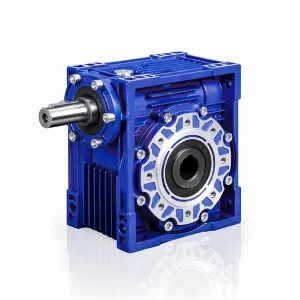
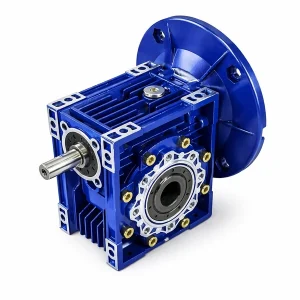
WPWO 웜 기어 감속기 | 19–2745 Nm, 0.12–33.2 kW 범용

WPWO series worm gear reducer, cast iron housing, output torque range 19–2745 Nm, rated power 0.12–33.2 kW. Input speed 1,400 rpm, output speed 19–186.7 rpm at standard ratios 5–60:1. Operating noise below 50 dB. Worm wheel in Copper-10-3# bronze, worm shaft in 20CrMnTi at HRC 56–62. For metallurgy, plastics, chemicals, mining and heavy conveying applications.
WPWO Series Worm Gear Reducer — Universal Heavy-Duty Gearbox, 19–2745 Nm
The WPWO series is a universal-mounting 웜 기어 감속기 built around a cast iron housing, designed for the torque demands of heavy industrial machinery where the compact die-cast aluminium units used in packaging and light conveying would be under-specified. Output torque range is 19 to 2,745 Nm across the product series, with rated input power from 0.12 kW to 33.2 kW. At 1,400 rpm standard input speed, output speeds run from 19 to 186.7 rpm depending on the selected ratio.
The housing is cast iron throughout — not the die-cast aluminium alloy used in the RV and NMRV series. Cast iron provides higher housing rigidity under sustained radial and axial shaft loads, better vibration damping in high-impact environments such as mining conveyor drives and rolling mill auxiliary equipment, and significantly better heat conduction to ambient air in continuous heavy-duty cycles where the smaller aluminium housing would exceed its thermal limits.
Noise level during operation is specified below 50 dB(A) — competitive with the aluminium series despite the larger size, due to the improved rigidity of the cast housing suppressing gear mesh vibration more effectively than a lower-stiffness aluminium alloy casting would. The WPWO accepts IEC motor flanges from 56B14 through 80B14 as standard, with wider flange options available for larger motor frame sizes.
기술 사양
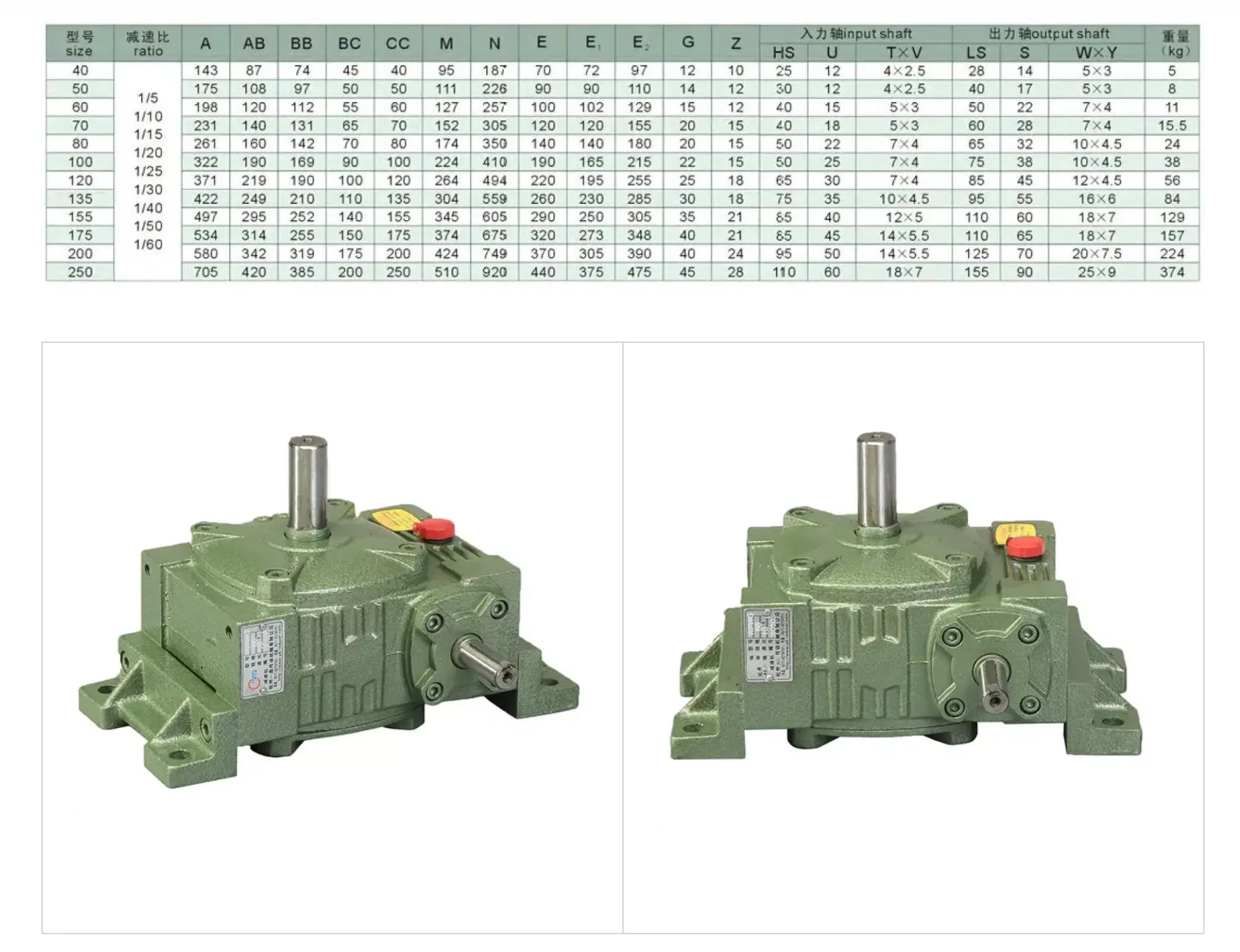
The two specification tables below cover the performance summary (torque, power, speed) and the complete material, configuration, and dimensional reference for the WPWO series. The product specification image follows immediately after.
Performance Summary
| 기어 장치 | 벌레 |
| 출력 토크 | 19–2,745 N·m |
| 정격 출력 | 0.12~33.2kW |
| 입력 속도 | 1,400 RPM |
| 출력 속도 | 19–186.7 RPM |
| Noise Level | < 50 dB(A) |
| 모델 | WPWO |
| 색상 | Green / Blue / Red or on customer request |
Full Material & Configuration Specification
| 유형 | Worm gearbox reducer |
| 모델 | WPWO |
| 비율 | 1:5, 10, 15, 20, 25, 30, 40, 50, 60 |
| 재료 | Housing: Cast iron (die-cast iron) |
| Worm Wheel: Copper-10-3# bronze alloy | |
| Worm Shaft: 20CrMnTi with carburizing and quenching, surface hardness 56–62 HRC | |
| 출력축: 크롬강 45# | |
| IEC 플랜지 | 56B14, 63B14, 63B5, 71B14, 80B14 and larger frames on request |
| 윤활유 | Synthetic / Mineral (ISO VG 220 or VG 320) |
| 포장 | Carton and wooden case |
| 보증 | 출하일로부터 18개월 (한국 Ever-Power 기준) |
| 품질 | ISO 9001:2015 |
| Typical Applications | Metallurgy, food and beverage, ceramics, chemicals, packaging, dyeing, woodworking, glass, mining, lifting and transportation |
Product Specification Charts
The charts below show the WPWO mounting dimensions, product outline drawings, and dimensional specifications across the standard size range. Use these for CAD integration and mounting verification.
Why Cast Iron Over Aluminium for Heavy-Duty Worm Gearboxes
The transition from die-cast aluminium to cast iron is not about weight — cast iron is 2.5–3× heavier for the same volume. It is about stiffness, thermal capacity, and durability under sustained high-torque and shock load conditions. In applications such as rolling mill auxiliary drives, crane slewing mechanisms, and mining conveyor head stations, the gearbox experiences radial and axial shaft forces that would flex an aluminium housing enough to affect gear mesh geometry and accelerate wear on the worm wheel.

Cast iron's higher modulus of elasticity (approximately 100–170 GPa vs 70 GPa for die-cast aluminium alloy) means the bearing seats deflect less under load, maintaining the centre-distance geometry between the worm shaft and worm wheel within tolerance across the operating load range. This is what allows the WPWO series to achieve output torques approaching 2,745 Nm in the larger frame sizes — a torque level at which the aluminium housing in an equivalent aluminium-body unit would require wall thicknesses that defeat the weight advantage of aluminium.
Cast iron also offers higher volumetric heat capacity — it absorbs and stores more heat energy per degree rise than aluminium does per unit volume. In a continuous heavy-duty cycle where the input power is near the thermal limit, cast iron's heat storage allows the housing to ride through short peak-load periods without the oil sump temperature spiking immediately. The vent plug and oil fill level should still be checked at the first 100-hour oil change to confirm proper thermal behaviour in the installed environment.
Key Specifications That Define the WPWO Series
✦ 19–2,745 N·m Output Torque Range
The torque range across the WPWO size series covers light-duty conveyors at the low end through to heavy rolling equipment auxiliary drives at the high end — a 145:1 torque ratio across the series. Specifying from a single product family simplifies procurement and maintenance sparing regardless of where in the range a specific drive sits.
✦ Rated Power to 33.2 kW
The 33.2 kW ceiling accommodates standard three-phase motor sizes up to 37 kW frame with appropriate service factor derating. This covers the vast majority of industrial drive applications in metallurgy, mining support, and bulk handling where a single worm stage is sufficient without the complexity of a multi-stage helical arrangement.
✦ Below 50 dB(A) Operating Noise
The cast iron housing provides significant mechanical damping of gear mesh frequencies that would otherwise be transmitted through a thinner aluminium wall. Below 50 dB(A) at rated load is an industry benchmark for worm gearboxes in this torque class — relevant not just for operator noise exposure but for vibration transmission into surrounding machine structure and instrumentation.
✦ Copper-10-3# Bronze Worm Wheel
Copper-10-3# (equivalent to ZCuSn10Pb3) is a tin-lead bronze that provides good load capacity and anti-seize properties at the sliding contact interface with the 20CrMnTi worm shaft. The lead component (3%) improves the initial break-in behaviour and reduces the risk of adhesive wear during the first operating hours — relevant for the higher contact stresses present in these larger frame sizes.
✦ Universal Mounting — Any Orientation
The "WO" designation indicates universal mounting — the WPWO housing can be installed foot-mounted, flange-mounted, or torque-arm-mounted in any of the standard positions. This makes it suitable for horizontal, vertical, and inclined shaft installations without a different housing variant for each orientation.
✦ 20:1 이상의 비율에서 셀프 락킹 기능 작동
At the standard single-start worm ratios of 20:1 and above, the output shaft is self-locking under static load. In lifting and gate actuator applications this eliminates a separate holding brake — a significant simplification in the electrical and safety system design for equipment in the 500–2,000 Nm torque class that would otherwise require a substantial brake motor assembly.
Industries and Applications
▸ Metallurgy, Steel & Lifting Equipment

Rolling mill auxiliary drives, crane slewing mechanisms, coil transfer tables, and ladle turret rotation are all applications where the WPWO's cast iron housing stiffness and high torque capacity are the deciding factors. A crane slew drive at 30:1 or 40:1 in the 1,000–2,000 Nm output torque range with a 7.5–15 kW motor is a typical WPWO specification in Korean steel plant equipment. The self-locking property at these ratios means the slew mechanism holds position when the motor is de-energised — a fail-safe behaviour that complements (but does not replace) the positive hold brake on a certified crane installation.
▸ Plastics, Beverage & Heavy Packaging Lines
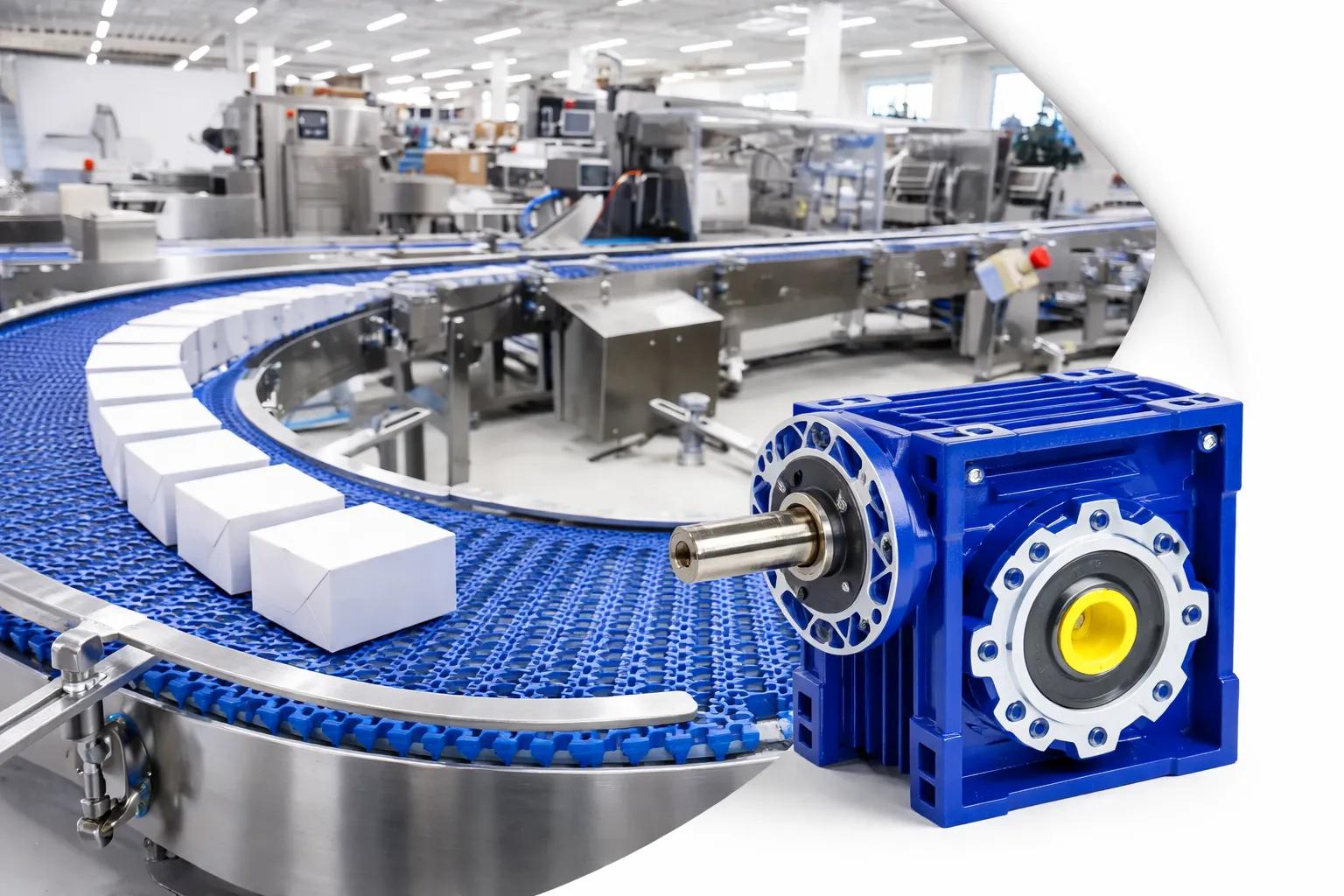
Plastic extrusion screw drives, blow moulding turntable drives, and beverage crate conveyor end-drives are applications where a compact aluminium gearbox runs hot under the high continuous torque demand of moving dense product loads. The WPWO's higher thermal mass and cast iron heat conduction path sustains continuous operation at load levels that would thermally limit an aluminium RV series unit. A blow moulding turntable drive at 15:1–20:1, 2.2–5.5 kW, 70–93 rpm is a typical WPWO application in Korean plastics processing plants.
▸ Mining, Chemical & Construction Equipment
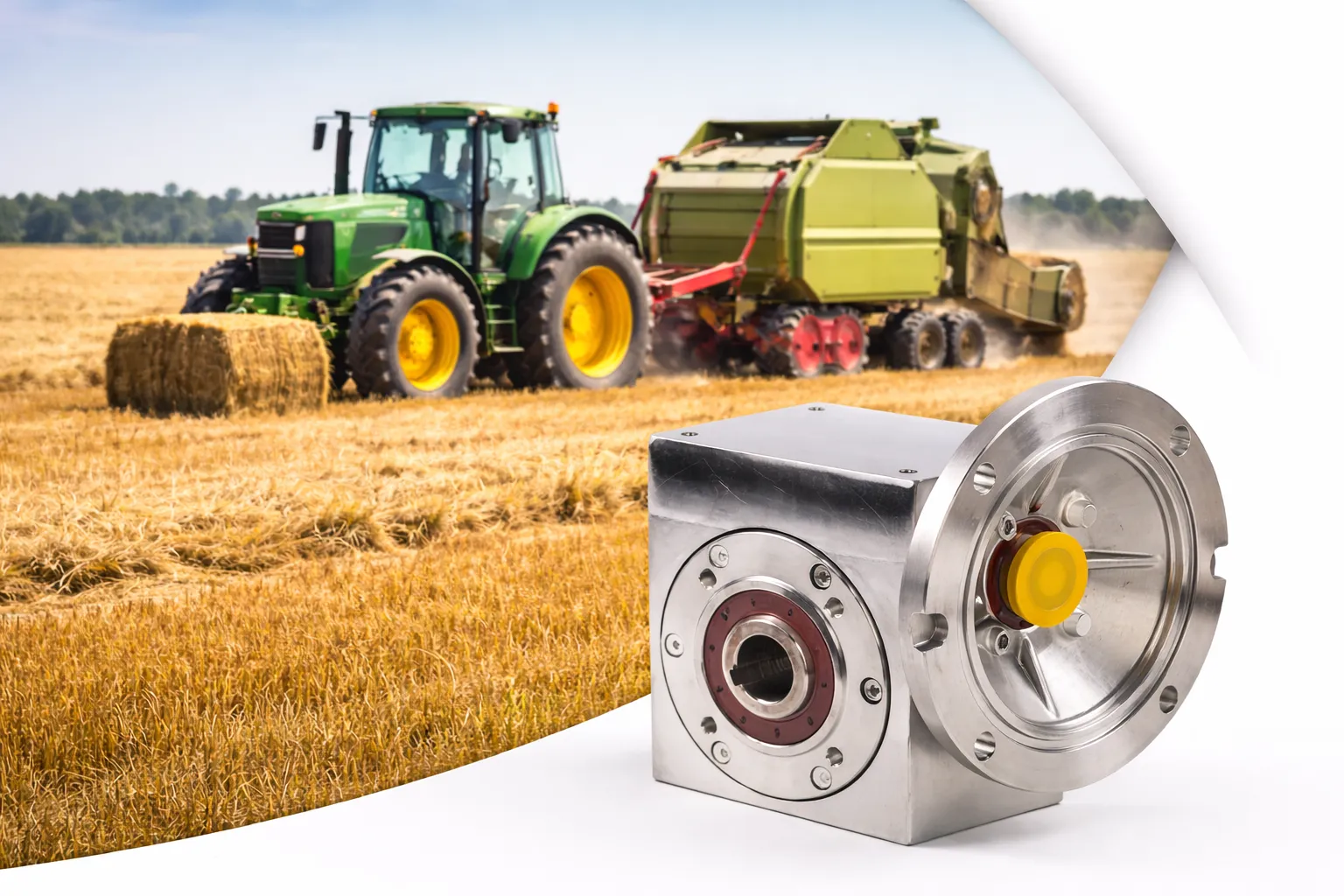
Mine support conveyor drives, chemical plant agitator shaft drives, and construction site concrete transport conveyors all require drives that are genuinely robust to vibration, shock loads, and exposure to dust, water, and chemical vapour. The WPWO cast iron housing withstands these conditions without the corrosion pitting that affects aluminium alloy housings in acidic or alkaline atmospheric environments. Typical mining conveyor specification: WPWO at 20:1–25:1, 5.5–11 kW, providing 500–1,000 Nm output torque for head-end drum drives on a 200–500 mm belt conveyor. For more 웜 기어 감속기 options across all torque ranges, see the full product range.
Installation & Maintenance Guidance
Korea Ever-Power recommends the following commissioning and maintenance sequence for the WPWO series in continuous industrial service:
- ◉ Before first start: Verify that the model number, centre distance, gear ratio, input connection method, output shaft configuration, and rotation direction match the machine requirement. Do not assume — check the nameplate against the order specification.
- ◉ Oil fill: Fill with the correct grade and quantity of lubricant per the product manual for your mounting position. Screw in the vent plug and unlock the small cone plug on the vent plug before starting. Running without a functioning vent plug under thermal cycling can pressurise the housing and force oil past the shaft seals.
- ◉ First 100 hours: Change the oil at 100 hours — this flush removes run-in particles from the worm and wheel break-in. After this service, the change interval is governed by duty cycle and oil type, but 2,000–3,000 hours or 12 months in continuous industrial service is the standard recommendation.
- ◉ Oil temperature monitoring: The maximum allowable continuous oil sump temperature is 95°C. If the temperature continues to rise after the initial warm-up period and does not stabilise below this limit, stop and investigate — likely causes are oil overfill, insufficient vent, incorrect lubricant grade, or operating above the thermal power rating for the installed ambient temperature.
- ◉ Abnormal noise or vibration: Stop immediately and inspect per the fault reference charts above. Common causes are bearing wear (output shaft radial play), worm wheel tooth wear (increased backlash), or worm shaft surface pitting (irregular noise at mesh frequency). Do not continue operating under abnormal noise in heavy industrial applications where the downstream load represents a safety or production risk.
매칭 드라이브 부품
The WPWO gearbox is a heavy-duty assembly, and the worm wheel is the primary wear component in continuous high-torque operation. Sourcing replacement wear parts from the same manufacturer ensures the tooth profile, alloy grade, and bore dimensions are matched to the original — particularly important at the higher end of the torque range where a dimensional mismatch at the gear mesh can create uneven load distribution that accelerates wear.

⚙ 웜 휠 — 웜웜휠.탑
Copper-10-3# (ZCuSn10Pb3) bronze worm wheels for the WPWO series, manufactured to match the centre distance and tooth profile of the original. For high-torque frames (output torque above 1,000 Nm), confirm the bore diameter and keyway dimensions at inquiry — these are frame-size-specific. Supplied as bare gear or assembled onto shaft.
⚙ 웜 샤프트 — 웜휠기어.탑
20CrMnTi alloy steel worm shafts for the WPWO series, carburised, quenched and ground to DIN 3974. Surface hardness HRC 56–62, 0.3–0.5 mm retained case. For heavy-duty continuous operation, the worm shaft is expected to outlast several worm wheel replacement cycles — but shaft surface integrity should be checked at each wheel replacement for pitting or abrasive wear marks.
⚙ 샤프트 커플링
At the WPWO torque class, flexible jaw couplings or pin-and-bush couplings between gearbox output shaft and the driven load shaft absorb minor shaft misalignment and reduce shock load transmission into the gearbox bearings. For output torques above 1,000 Nm, rigid flange couplings or shaft-locking assemblies (Ringfeder type) are more common — contact us with output shaft diameter, bore requirement, and transmitted torque for a recommendation.
자주 묻는 질문
What is the maximum continuous output torque the WPWO series can sustain?
→ 2,745 N·m is the upper end of the rated output torque range across the full WPWO size series. This figure applies to the largest frame size at the appropriate ratio and input speed. Each individual frame size has its own torque limit — the dimensional drawings and specification table for the specific frame size you are considering should be consulted to confirm the rated output torque at your chosen ratio and input power. Contact Korea Ever-Power with your specific duty cycle for frame size confirmation.
Why does the WPWO use cast iron housing while many worm gearboxes use aluminium?
→ Cast iron provides approximately 40% higher modulus of elasticity than die-cast aluminium alloy, which means less bearing seat deflection under heavy radial and axial shaft loads. At output torques above 500 Nm, housing deflection in an aluminium body becomes significant enough to affect the gear mesh geometry and accelerate bronze wheel wear. Cast iron also has higher volumetric heat capacity, which helps manage the higher heat dissipation demands of continuous heavy-duty operation.
What output speed range does the WPWO series cover?
→ At 1,400 rpm input (standard 4-pole 50 Hz motor), the standard ratios of 5:1 through 60:1 deliver output speeds from 186.7 rpm (5:1) down to 19 rpm (60:1) at the higher ratio end. If your application requires output speeds below 19 rpm from a standard motor, a tandem two-stage combination unit (available in the WPWO family) or a primary reduction via a belt/chain stage before the gearbox would be required.
What is the oil temperature limit for continuous WPWO operation?
→ The maximum allowable continuous oil sump temperature is 95°C. If the temperature stabilises below this limit during warm-up, operation can continue. If it continues to rise and approaches 95°C, stop and check for the causes listed in the maintenance section: oil overfill, vent plug blocked, incorrect oil grade, or operation above the thermal power rating. Running above 95°C accelerates oil degradation and reduces the lubricating film thickness at the worm mesh.
Can the WPWO replace a WPA or WPDA series unit on an existing installation?
→ The WPWO, WPA, and WPDA series share the same basic worm gear design philosophy but differ in mounting configuration options and specific dimensional details. The "WO" suffix indicates universal mounting with foot-mount, flange-mount, and torque-arm options in the same housing. The WPA is single-shaft output; the WPDA is double-shaft output. Before substituting a WPWO for a WPA or WPDA on an existing installation, verify that the specific shaft configuration, centre distance, and flange dimensions match. Contact Korea Ever-Power with the existing unit's nameplate data for a confirmed replacement recommendation.
Does the WPWO qualify for ISO 9001 certification?
→ Yes. Korea Ever-Power operates under an ISO 9001:2015 quality management system and the WPWO series is manufactured within this system. An ISO 9001 certificate copy is available on request for customer quality records. Every WPWO unit is tested before despatch — the test includes rotation under load and a noise check at rated input speed.
고객들이 하는 말
정우식, Plant Engineer, Pohang Steel Processing Facility (2024)
"Running three WPWO units on coil transfer table drives at approximately 800 Nm output. The cast iron housings handle the vibration from adjacent rolling equipment without any sign of fatigue cracking after 16 months. Oil temperature runs at 72°C steady-state under continuous load — well under the 95°C limit."
Kim Dae-hyun, Maintenance Manager, Incheon Chemical Plant (Q3 2024)
"We needed a heavy-duty gearbox for an agitator shaft in a chemical vessel — aggressive atmosphere outside, continuous S1 duty inside. The WPWO at 40:1, 5.5 kW has been running for 13 months without sealing issues. The noise level is noticeably lower than the previous unit we used."
Park Hyun-seok, Procurement Engineer, Gyeonggi-do Plastics Processing OEM (2024)
"Used WPWO units on blow moulding turntable drives, 15:1, 4 kW. The aluminium unit we used previously ran too hot at continuous full load. The cast iron WPWO runs cooler at the same load — confirmed by temperature measurement. First oil change at 100 hours showed moderate bronze run-in particles; subsequent changes have been clean."
Lee Sang-joon, Equipment Manager, Busan Mining Equipment Supplier (late 2024)
"Specified WPWO for mine support conveyor head drives, 25:1, 11 kW. Dust environment, vibration, occasional overloads at start. At 10 months the units are still on their original oil fill for the second change — no seal failures, no abnormal noise. Good product for the application."
Choi Young-bin, Design Engineer, Seoul Construction Machinery OEM (Q1 2025)
"Replaced a European brand gearbox on a concrete transport conveyor drive with the WPWO at 20:1, 7.5 kW. Dimensional drawings were accurate and the replacement bolted in without modification. Lead time was 8 days from order. Price was approximately 60% of the European unit."
Oh Tae-kyung, Production Manager, Daegu Ceramics Manufacturer (2024)
"Running WPWO units on kiln turntable drives — high ambient temperature, dusty environment. The cast iron housing handles the thermal expansion better than aluminium did in previous units, which had bearing seal issues from differential thermal expansion. Two years in with no problems."
추가 정보
| 편집자 | Cxm |
|---|