Reductores de engranajes helicoidales para maquinaria agrícola
Agricultural equipment stacks multiple stress factors onto a single small drive component — dust, mud, agrichemical exposure, cold-morning startups, and seasons of work between service intervals. Choosing the right reductor de engranajes helicoidales for the specific machine function keeps the drive running through the entire growing season without surprises.
Why Agricultural Drive Conditions Are Harder Than They Appear
Industrial machinery runs in a controlled environment. An agricultural machine does not. In a single working day, a Korean vegetable transplanter or seeder might start in near-freezing morning air, operate through muddy clay soil conditions by mid-morning, and be exposed to irrigation water or fertilizer spray by afternoon. The reductor de engranajes helicoidales mounted to that machine has to handle all of these conditions reliably, with maintenance intervals measured in full growing seasons rather than operating hours.
The combination of demands that makes agricultural reducer selection specific is this: the load can be high and unpredictable (roots and rocks cause shock loads that exceed the steady-state torque by a wide margin), the environment is chemically aggressive (fertilizer residue and pesticide drift attack standard seal materials), and the machine must be light enough to operate on soft soil without excessive compaction. These three factors point in different directions from a mechanical design perspective and have to be resolved in a single reducer selection.
Beyond the operating conditions, seasonal use patterns mean a reductor de engranajes helicoidales on an agricultural machine might sit unused for three to four months between seasons — which puts different demands on seals and lubricants than continuous industrial operation.


Where Worm Gear Reducers Appear in Agricultural Equipment
The range of agricultural applications for a compact caja de engranajes de tornillo sin fin is wider than most procurement engineers realize. The table below covers the primary machine types used across Korea, Japan, and Southeast Asian markets, along with the reducer’s role in each and the key selection criteria:
| Tipo de equipo | Worm Reducer Function | Typical Model | Rango de potencia | Key Requirement |
|---|---|---|---|---|
| Vegetable transplanter | Row spacing adjustment | NMRV025 – NMRV040 | 0.06 – 0.37 kW | Self-locking, IP65 |
| Seed drill / Seeder | Ground-drive seed metering | NMRV040 – NMRV063 | 0.18 – 0.75 kW | Uniform load, IP54 |
| Fertilizer spreader | Distribution disc / auger drive | NMRV040 – NMRV063 | 0.25 – 1.1 kW | Agrichemical seals |
| Boom sprayer | Boom fold / unfold mechanism | NMRV050 – NMRV075 | 0.37 – 0.75 kW | IP65, compact layout |
| Rice transplanter / Nursery | Tray-feed intermittent drive | NMRV025 – NMRV040 | 0.06 – 0.25 kW | Compact, self-locking |
| Combine harvester (auxiliary) | Unloading auger / grain tank | WP series (cast iron) | 2.2 – 7.5 kW | Heavy duty, impact load |
| Greenhouse automation | Tray transport / positioning | NMRV025 – NMRV050 | 0.12 – 0.75 kW | IP54, 16+ hr/day duty |
The pattern across nearly all of these applications is the same: low output speed, compact installation, intermittent or light-continuous load, and a need for reliable position hold when the drive is stopped. A reductor de engranajes helicoidales serves all of these requirements with a simpler, lower-cost package than the alternatives.
Technical Requirements Specific to Agricultural Applications
Protection Rating: Start at IP54, Target IP65 for Crop Equipment
IP54 is the minimum practical rating for a reductor de engranajes helicoidales operating in open-field agricultural conditions. Dust ingress through a lower-rated seal eventually contaminates the lubricant, accelerating abrasive wear on the rueda helicoidal surface. For equipment operating near spray systems, irrigation, or washdown procedures — transplanting machines, sprayers, and greenhouse automation — IP65 is the appropriate target. The difference in unit cost between IP54 and IP65 variants is small relative to the cost of an unplanned field failure during a planting window.
Housing Material: Why Aluminum Matters in Weight-Sensitive Machines
A compact aluminum housing reductor de engranajes helicoidales (NMRV series) weighs 40–60% less than a cast iron unit at the same frame size. On a vegetable transplanter with four to eight row-planting stations, that weight difference across multiple mounted drives is significant — it affects both the total machine weight and the balance of the machine on sloped fields. Aluminum also resists surface corrosion from fertilizer splash better than bare cast iron, though surface treatment and sealed bearings remain important regardless of material.
Seal Compatibility with Agrichemicals
Standard NBR (nitrile rubber) seals perform acceptably in clean industrial environments. In direct contact with herbicide residue, ammonium-based fertilizer, or organophosphate compounds, NBR degrades faster than the expected maintenance interval. Fluorocarbon (Viton) lip seals hold up significantly better against these chemical groups and are worth specifying on any motor de engranaje helicoidal or reducer mounted on spraying or fertilizer application equipment.
Cold-Morning Startup Performance
Korean agricultural seasons start in temperatures that can reach -10°C to -15°C before dawn during early spring planting. ISO VG 220 mineral gear oil — the standard fill for most reductores de engranajes helicoidales — approaches its functional lower limit in this temperature range. The oil becomes thicker, flow to the worm mesh is slower at startup, and the first few minutes of operation run metal-to-metal until the oil warms. Synthetic ISO VG 220 maintains consistent viscosity down to -25°C, enabling immediate full-load operation on cold mornings without a warm-up period. The cost difference is modest over the service life of the reducer.
Self-Locking: The Key Feature for Adjustment Mechanisms
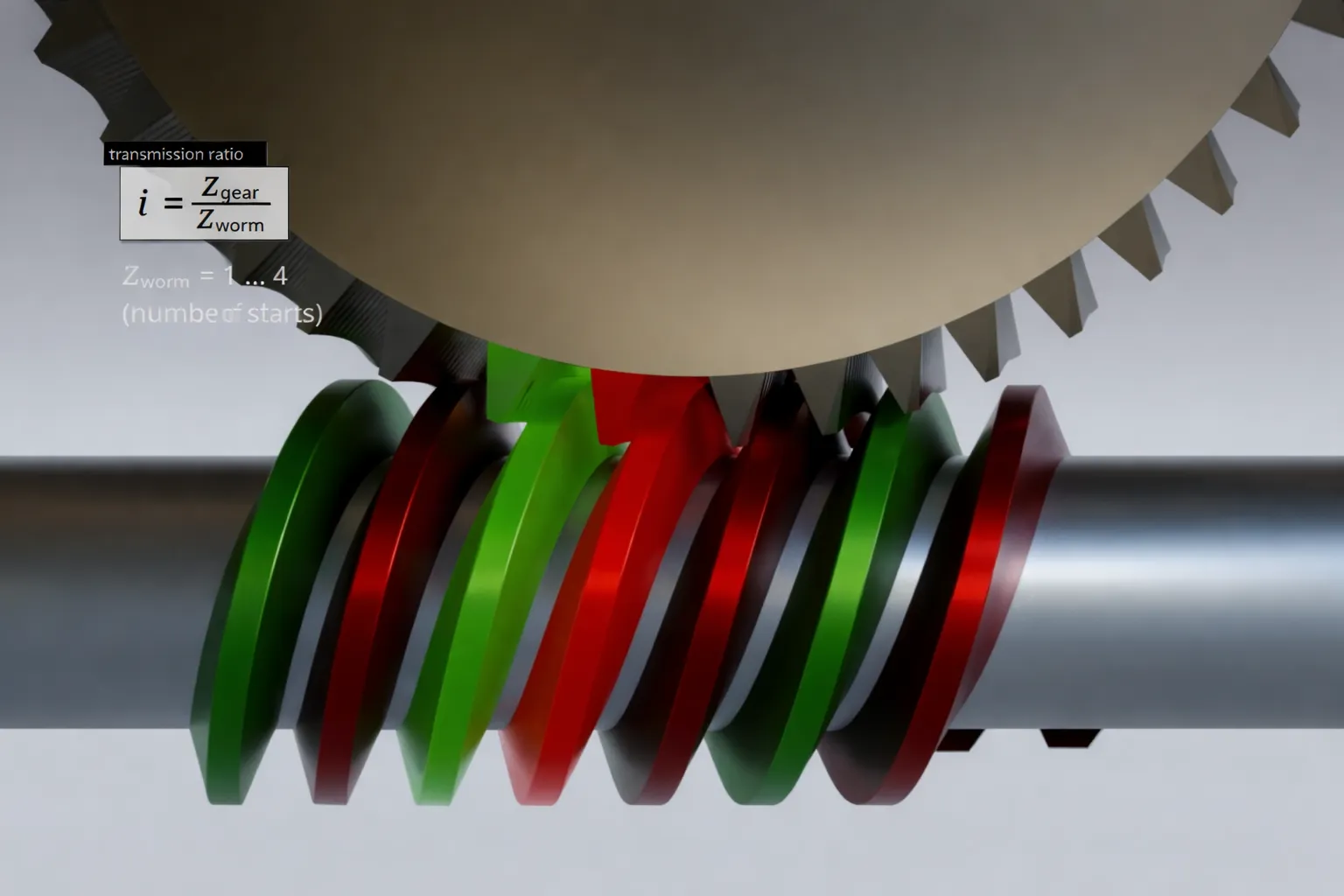
Many agricultural machines rely on manually or electrically actuated adjustment mechanisms — row spacing, planting depth, boom height, tilt angle — that must hold their set position under continuous field vibration without creeping back. A reductor de velocidad de engranaje helicoidal with a ratio at or above 20:1 is inherently self-locking: the output shaft cannot be back-driven by the load. This property eliminates the need for a separate locking pin, ratchet, or electromechanical brake in adjustment mechanisms, simplifying the design and reducing failure points.
Why the RV and NMRV Series Dominate Agricultural Applications
The RV and NMRV compact aluminum reductor de engranajes helicoidales families have become the default choice for agricultural equipment designers across Asia and Europe for reasons that are straightforward once you see the specification match. The aluminum housing provides the weight advantage described above. The compact square profile fits into the tight envelope constraints of transplanter row units, seeder drive boxes, and folding boom mechanisms where there is simply no room for a larger reducer body.
Frame sizes 025 through 150 cover the full power range of agricultural drives from a small adjustment actuator (0.06 kW) through a moderate-power seeder main drive (7.5 kW). Standard gear ratios from 7.5:1 to 100:1 address every output speed requirement from slow walking-speed transplanting through faster ground-drive applications. The IEC motor flange on the NMRV variant accepts any standard three-phase AC motor directly without an adapter bracket — an advantage on machines where motors are sometimes replaced in the field with locally available units.
The hollow shaft output option available on RV/NMRV series units simplifies installation significantly. The reducer slides directly onto the driven shaft — the row-unit drive shaft, the seeder disc shaft, or the auger shaft — without requiring a shaft coupling or precise coupling alignment. This matters on machines assembled in agricultural machinery plants where installation precision is lower than in industrial machine shops.

For greenhouse automation and indoor agricultural systems where positioning accuracy is more important than weight savings, the VRV030 precision reductor de engranajes helicoidales offers reduced backlash ratings suitable for servo-driven tray positioning. This series provides the same right-angle compact layout with better angular accuracy for applications where tray spacing or row positioning needs to be repeatably precise.
Browse the full worm gear reducer range — including RV, NMRV, and WP series with the specific IP ratings and shaft configurations used in agricultural equipment.
Three Agricultural Drive Applications That Illustrate Selection Logic

Korean Vegetable Transplanter — Row Spacing Adjustment
Context: A Korean agricultural machinery manufacturer producing multi-row vegetable transplanting machines for domestic sale and export to Japan needed to redesign the row-spacing adjustment mechanism on a 4-row unit. The original mechanism used a manual screw with a locking nut — operators found it slow to adjust between crop rows and the setting drifted under field vibration.
Solution: NMRV040 reductor de engranajes helicoidales, ratio 40:1, 0.18 kW 24V DC motor per pair of rows. Stainless steel output shaft for corrosion resistance in wet field conditions. IP65 labyrinth seals. The 40:1 ratio provides reliable self-locking — the row spacing setting holds under continuous vibration and soil resistance without a locking device or active brake. Adjustment time per row pair reduced from 4 minutes to under 30 seconds.
Outcome: The redesigned mechanism operated through a full transplanting season (approximately 600 operating hours) without adjustment drift or seal failure. The manufacturer standardized this configuration across their 4-row and 6-row transplanter lines.
Southeast Asian Drone Ground Station — Boom Folding
Context: An agricultural UAV support equipment manufacturer in Vietnam needed a compact, lightweight drive for the automatic boom folding mechanism on a self-propelled drone launch and spray support vehicle. The boom extends to 4.2 meters for spray operations and folds to 1.1 meters for road transport. Total folding cycle time needed to be under 12 seconds with the full weight of the boom and spray tank attachment.
Solution: NMRV050 caja de engranajes de tornillo sin fin, ratio 30:1, 0.55 kW 48V DC brushless motor. Aluminum housing kept the total drive assembly under 2.8 kg including motor, within the vehicle’s weight budget. The 30:1 self-locking ratio holds the extended boom securely while stationary without additional locking hardware. IP65 seals for outdoor tropical operation.
Outcome: The vehicle completed a full season of rice paddy operations (approximately 800 operating hours) across three provinces without a drive-related failure. Folding cycle time of 9.4 seconds met the operational requirement.
Korean Greenhouse — Water Culture Tray Transport Line
Context: A greenhouse vegetable producer in Gyeonggi-do upgrading to automated nutrient film technique (NFT) hydroponic lines needed a drive system for the tray transport conveyor that would run 18 hours per day, fit within the 180mm gap between row channels, and require minimal maintenance during the 10-month growing cycle.
Solution: NMRV030 series reductor de engranajes helicoidales, ratio 20:1, 0.25 kW motor per conveyor zone. Hollow shaft output for direct roller shaft mounting. IP54 sealing adequate for the greenhouse humidity environment without chemical spray exposure. Multiple zones driven from the same motor using hollow shaft chain connections reduced total drive cost per meter of conveyor by 34% compared to the previous configuration.
Outcome: The conveyor system ran the full 10-month growing cycle without a drive stop. First oil change was performed at the seasonal shutdown — the oil sample showed minimal contamination after 1,800 operating hours of light continuous duty.
What Agricultural Equipment OEMs Actually Focus On When Procuring
Interchangeability with Current Installed Base
Agricultural OEMs in Korea, Japan, and the wider Asian market have historically sourced compact reductores de engranajes helicoidales from European and domestic brands including Bonfiglioli, Transtecno, STM, and local Korean manufacturers. The mounting face dimensions, shaft sizes, and bolt-hole patterns of the NMRV and RV series are dimensionally compatible with the industry-standard sizes used by these brands at equivalent frame sizes. This means a direct replacement can typically be installed without modifying machine frames or drive connections — the brand note is included for selection reference purposes only and does not imply any commercial affiliation.
Spare Parts Availability Through the Season
Agricultural production cannot stop for a week while a replacement reducer is ordered. Procurement planning for agricultural OEMs typically requires confirmed stock availability for the models specified on current-production machines. For machines sold in Korea, consignment stock agreements or domestic warehouse arrangements are worth discussing at the quotation stage when volumes justify it.
Seasonal Batch Ordering Strategy
Agricultural machinery production is concentrated before the spring planting season. Orders placed in January–February for spring delivery represent the majority of the annual volume for many machine types. Placing orders 8–10 weeks before the required delivery date ensures production scheduling priority and avoids the premium costs that apply to expedited orders. Contacta con nuestro equipo de ingeniería. in Q4 to begin seasonal planning discussions for the following year’s production.
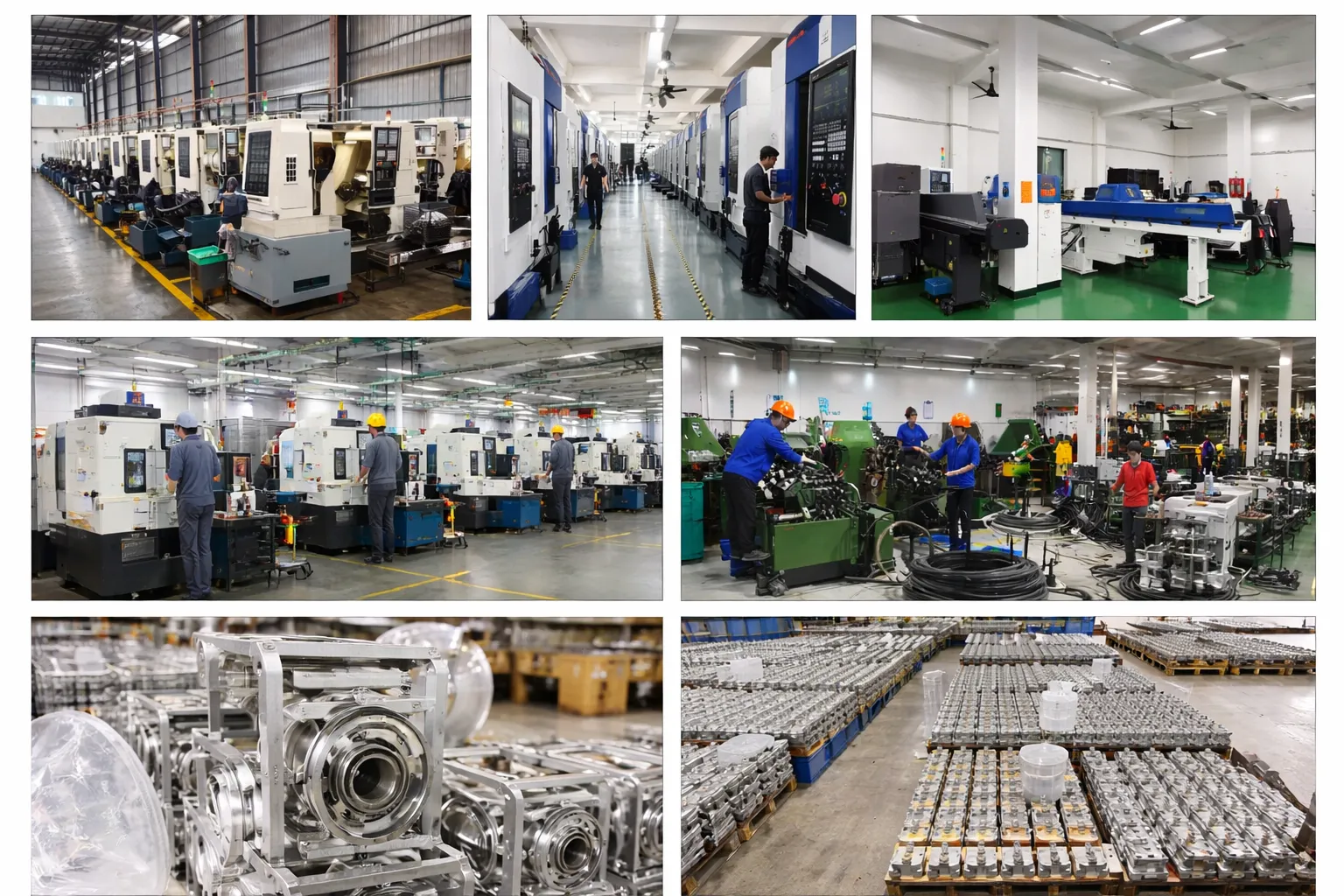
As a fabricante especializado de reductores de engranajes helicoidales, Korea Ever-Power maintains production flexibility for agricultural OEM volumes that would require a 10–12 week queue at a larger general-purpose gearbox manufacturer. For agricultural customers, this is a practical advantage during the pre-season period when delivery timing directly impacts product launch schedules.
Frequently Asked Questions — Agricultural Worm Gear Reducer Selection
What IP protection rating is the minimum for field agricultural equipment?
Should I use synthetic lubricant for cold-morning startup in Korean winter conditions?
How do I match a replacement worm gear reducer to the one currently on my machine?
What is the minimum order quantity for agricultural OEM seasonal orders?
How do I confirm the self-locking is sufficient for a row-spacing or depth adjustment mechanism?
Ready to Specify a Worm Gear Reducer for Your Agricultural Machine?
Share your machine type, required output speed and torque, installation space constraints, and environment details. We will confirm the correct reductor de engranajes helicoidales model — including IP rating, housing material, and shaft configuration — within one business day.
Editor: Cxm