Riduttori a vite senza fine per macchinari alimentari e farmaceutici
Utilizzando uno standard industriale riduttore a vite senza fine In un'area di produzione alimentare o farmaceutica, la questione non è di prestazioni, ma di conformità. La lubrificazione NSF H1, l'alloggiamento in acciaio inossidabile, la protezione IP67 contro i lavaggi e la progettazione igienica dell'installazione non sono optional in questo settore.
Tre requisiti che i riduttori a vite senza fine standard non soddisfano
Quando un riduttore a vite senza fine Se un componente viene installato in un'area di produzione alimentare, di bevande o farmaceutica, oltre alle specifiche di prestazione meccanica che regolano la selezione industriale standard, si applicano tre requisiti distinti. Comprendere questi tre aspetti è ciò che distingue un'installazione conforme da una fonte di rischio.
Strato 1 — Conformità del materiale: Qualsiasi sostanza che possa entrare in contatto con un prodotto alimentare, direttamente o indirettamente, inclusi i lubrificanti che potrebbero fuoriuscire o schizzare, deve essere conforme alle normative vigenti in materia di contatto con gli alimenti. In Corea, si applica la legge sull'igiene alimentare. Per l'esportazione o per la conformità alle normative in materia di igiene alimentare, la certificazione NSF (National Sanitation Foundation) rappresenta il punto di riferimento internazionale. L'utilizzo di un olio minerale standard per ingranaggi in un riduttore a vite senza fine posizionato sopra una linea di lavorazione alimentare espone l'impianto al rischio di non superare i controlli, indipendentemente dal fatto che l'olio entri o meno in contatto con il prodotto.
Strato 2 — Pulibilità: Le attrezzature per la produzione alimentare vengono pulite a intervalli programmati: giornalmente, a ogni turno o con maggiore frequenza a seconda del tipo di prodotto. Questa pulizia può essere manuale o tramite CIP (Clean In Place), in cui la soluzione detergente viene fatta circolare lungo la linea di produzione. La superficie dell'alloggiamento del riduttore a vite senza fine deve far defluire il liquido, non trattenerlo. Le zone morte, come incavi, sporgenze orizzontali e alloggiamenti delle teste dei bulloni, in cui si accumulano residui di prodotto o soluzione detergente, diventano fonti di contaminazione tra un ciclo di pulizia e l'altro.
Strato 3 — Prevenzione delle perdite: Un riduttore a vite senza fine standard con guarnizioni dell'albero usurate finirà per presentare perdite d'olio dalle uscite dell'albero. In un contesto industriale generico, questo rappresenta un problema di manutenzione. In un'area di produzione alimentare, al di sopra di un nastro trasportatore o di una macchina riempitrice, la perdita d'olio costituisce un evento di contaminazione del prodotto che comporta l'arresto della produzione, un'indagine sul richiamo e potenziali provvedimenti normativi.
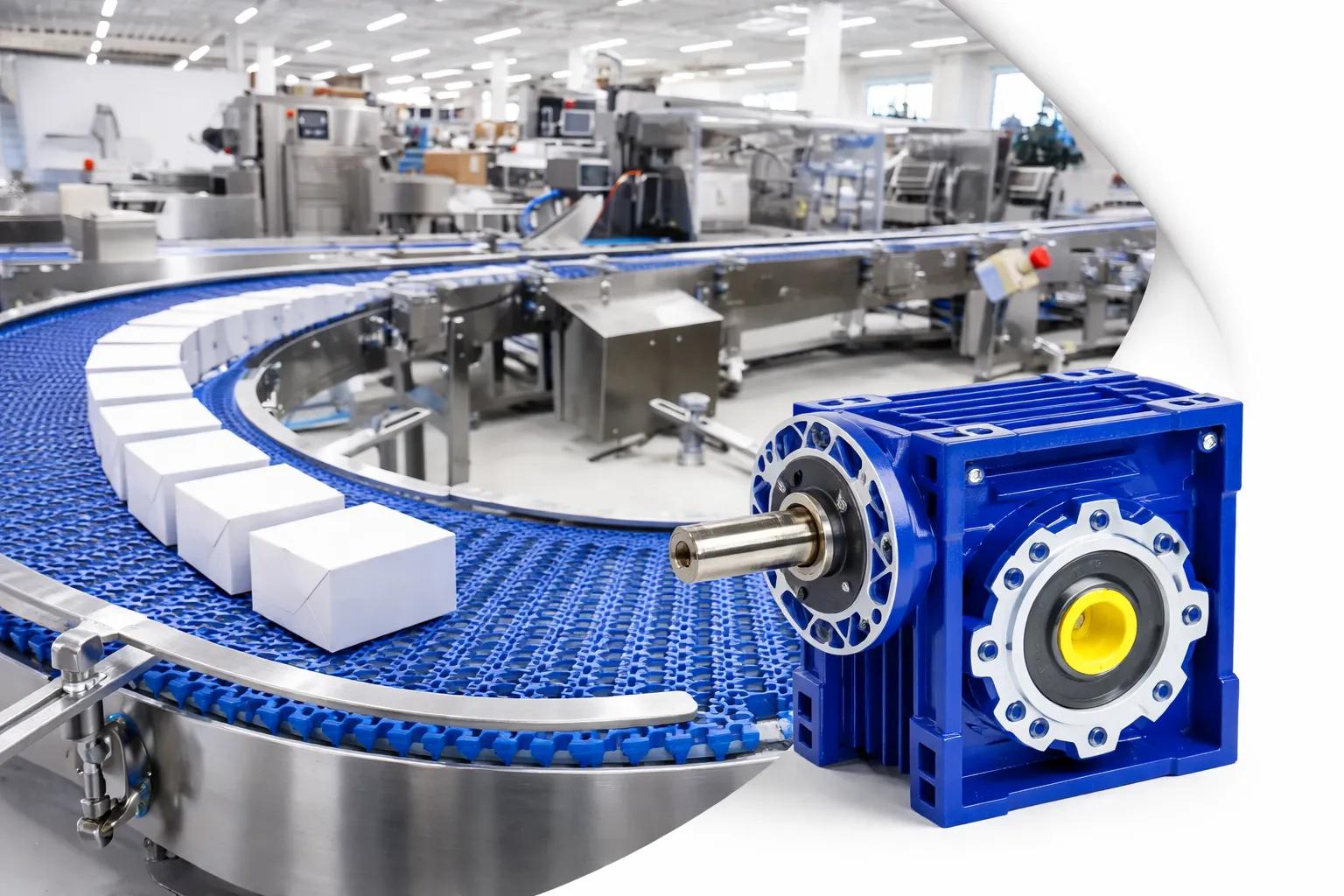
Matrice di applicazione alimentare e farmaceutica
La tabella seguente indica dove si trova un riduttore a vite senza fine Viene utilizzato nei macchinari per l'industria alimentare, delle bevande e farmaceutica, con requisiti di conformità per ogni posizione.
| Tipo di apparecchiatura | Posizione del riduttore | IP minimo | Requisito chiave di conformità |
|---|---|---|---|
| Linea di trasporto per alimenti | testa di trasmissione a cinghia | IP65 | Lubrificante NSF H1; si preferisce un alloggiamento in acciaio inossidabile. |
| Macchina per il riempimento di liquidi | Azionamento del pistone o della valvola | IP67 | Certificazione NSF H1; guarnizioni in VITON; compatibile con lavaggio CIP |
| Mescolare e amalgamare | Azionamento dell'albero dell'agitatore | IP65 | NSF H1; tenuta a doppio labbro dell'albero |
| Macchina per l'imballaggio | Alimentazione/formatura della pellicola | IP54 | Certificazione NSF H1 preferibile; nessuna zona a rischio di contaminazione |
| Alimentatore per pressa per compresse | Azionamento del dosatore di polvere | IP65 | Materiali di grado farmaceutico; compatibili con camere bianche |
| linea di imbottigliamento bevande | Coppia di serraggio del tappo / trasportatore | IP67 | Certificazione NSF H1; compatibile con cicli di risciacquo ad alta pressione |
| lavorazione di alimenti surgelati | Azionamento del nastro trasportatore o del taglio | IP67 | Olio per basse temperature NSF H1; prestazioni del lubrificante per avviamento a freddo |
| Automazione delle camere bianche | Posizionamento o trasferimento | IP65 | Design chiuso; nessuna tasca di fissaggio esposta; basse emissioni di particelle. |
Materiali e requisiti di certificazione: il significato effettivo di ogni norma
Lubrificante NSF H1: non è la stessa cosa di un lubrificante "per uso alimentare".
NSF H1 è la certificazione specifica per i lubrificanti idonei al contatto accidentale con gli alimenti: possono entrare in contatto con il cibo in modo accidentale (schizzi, gocciolamenti) senza comprometterne la sicurezza. Gli oli NSF H1 utilizzano oli base minerali bianchi o PAO con additivi tutti presenti nell'elenco approvato dalla FDA 21 CFR 178.3620.
La dicitura "per uso alimentare" senza la certificazione NSF H1 non costituisce una dichiarazione di conformità valida. Un fornitore che afferma che un lubrificante è "per uso alimentare" senza il numero di registrazione NSF H1 sta semplicemente utilizzando un linguaggio di marketing, non un documento di conformità. Richiedete sempre il numero di registrazione NSF H1.
Materiale dell'alloggiamento: quando è richiesto l'acciaio inossidabile
Gli alloggiamenti standard in alluminio per valvole di non ritorno (NMRV) con trattamento superficiale anodizzato sono accettabili in molti ambienti di produzione alimentare. Gli alloggiamenti in acciaio inossidabile SUS304 sono richiesti quando: l'unità si trova direttamente in una zona umida (sopra le linee di prodotto), quando vengono utilizzati detergenti clorurati che possono aggredire l'alluminio, o quando lo standard di sicurezza alimentare del cliente o il piano HACCP specificano l'utilizzo di materiale in acciaio inossidabile per tutte le apparecchiature della zona.
La ghisa verniciata non è idonea per le zone a diretto contatto con gli alimenti, poiché le schegge di vernice rappresentano una fonte di contaminazione. L'alluminio o l'acciaio inossidabile sono i due materiali accettabili.
Materiale della guarnizione: VITON o PTFE, non NBR
Le guarnizioni standard per alberi di riduzione a vite senza fine utilizzano materiale NBR (gomma nitrilica) per le labbra. L'NBR è resistente agli oli minerali, ma si degrada a contatto con detergenti clorurati, ozono e alcuni acidi alimentari, tutti presenti negli ambienti di produzione alimentare.
Per i riduttori a vite senza fine per l'industria alimentare e farmaceutica, si consiglia di utilizzare guarnizioni per alberi in VITON (FKM). Il VITON resiste a detergenti clorurati, acidi diluiti, prodotti chimici per la pulizia CIP e ozono senza gonfiarsi o indurirsi. Inoltre, offre un intervallo di temperatura di esercizio più ampio rispetto all'NBR.
IP67: Lo standard di resistenza al lavaggio
IP67 significa che l'unità è protetta contro l'immersione completa in acqua fino a 1 metro di profondità per 30 minuti. In termini pratici, nella produzione alimentare, IP67 è la classificazione che conferma che il riduttore a vite senza fine può resistere al lavaggio ad alta pressione con acqua calda e detergente senza infiltrazioni, la procedura di pulizia più comune negli impianti alimentari.
Il grado di protezione IP65 (protezione dai getti d'acqua) è sufficiente per le aree in cui il riduttore a vite senza fine viene risciacquato con un tubo flessibile, ma non è soggetto direttamente a spruzzi ad alta pressione prolungati.
Riduttore a vite senza fine in acciaio inox XRV050: specifiche per l'industria alimentare e farmaceutica
La serie XRV050 è il riduttore a vite senza fine in acciaio inossidabile per uso alimentare della gamma di prodotti Ever-Power coreana, progettato specificamente per applicazioni in ambienti umidi nei settori alimentare, delle bevande, dei prodotti ittici e farmaceutico.

| Parametro | XRV050 (Per uso alimentare) | Standard NMRV050 |
|---|---|---|
| Materiale per l'edilizia | acciaio inossidabile SUS304 | Lega di alluminio ADC12 |
| Materiale di tenuta dell'albero | VITON (FKM) | NBR (standard) |
| Grado di protezione IP | IP67 | IP54 (standard) |
| Elementi di fissaggio | acciaio inossidabile SUS304 | acciaio zincato |
| Lubrificante (di primo riempimento) | Olio alimentare certificato NSF H1 | Olio minerale ISO VG 220 |
| Finitura superficiale | Superficie liscia, con fessure ridotte al minimo Ra ≤3,2μm | superficie pressofusa |
| Applicazione tipica | Cibo, bevande, prodotti farmaceutici, frutti di mare, mattatoio | industriale generale |
Restrizioni di pulizia: Non utilizzare detergenti con concentrazioni di cloruro superiori a 200 ppm sull'acciaio inossidabile SUS304, poiché ciò provoca corrosione per vaiolatura. Per i protocolli CIP ad alto contenuto di cloro, è richiesto l'acciaio inossidabile SUS316. Verificare le specifiche del detergente prima di finalizzare la selezione del materiale.
Progettazione dell'installazione della zona igienica: quattro principi
Principio 1: Eliminare le zone morte
Installare il riduttore a vite senza fine con un'inclinazione che permetta il drenaggio automatico: evitare superfici orizzontali dove il liquido possa ristagnare. Tutte le superfici di montaggio devono convogliare il liquido verso uno scarico. Gli incavi delle teste dei bulloni e le sporgenze orizzontali sulla parte esterna dell'alloggiamento devono essere sigillati con silicone alimentare, ove possibile, oppure l'alloggiamento deve essere orientato in modo che siano rivolti verso il basso.
Principio 2: Mantenere l'albero di uscita accessibile per l'ispezione
La guarnizione dell'albero di uscita è il punto a più alto rischio di perdite. Progettare l'installazione in modo che quest'area sia ispezionabile visivamente durante il funzionamento e accessibile per la sostituzione della guarnizione durante la manutenzione programmata. Racchiudere la zona dell'albero di uscita all'interno di un telaio della macchina, dove non è possibile vederla o accedervi, rappresenta una soluzione igienicamente inadeguata: qualsiasi perdita d'olio diventa invisibile fino a quando non si verifica un evento di contaminazione.
Principio 3: Guarnizioni e sigilli rivolti verso il basso
Qualsiasi guarnizione o giunto di tenuta statica sull'alloggiamento del riduttore a vite senza fine (la superficie di contatto dell'alloggiamento, il tappo di riempimento dell'olio, l'oblò di ispezione) deve essere orientato verso il basso o lateralmente, mai verso l'alto. Una guarnizione rivolta verso l'alto è una trappola per liquidi che trattiene continuamente acqua contaminata a contatto con la guarnizione, accelerando il degrado del materiale di tenuta e creando un punto di accumulo di contaminazione.
Principio 4: Mantenere una distanza minima dal suolo
Montare il riduttore a vite senza fine con uno spazio sufficiente dal pavimento o dalla base della macchina per consentire alle attrezzature di pulizia di raggiungere la parte inferiore: in genere, le norme di sicurezza alimentare richiedono uno spazio minimo di 200 mm. Un riduttore montato direttamente sul pavimento non può essere pulito correttamente nella parte inferiore, creando una zona di accumulo di contaminanti.
Tre casi di applicazione nei settori alimentare e farmaceutico
Caso 1: Stabilimento coreano di confezionamento alimentare — Linea di produzione CIP
Applicazione: Nastro trasportatore per una linea di confezionamento di piatti pronti, pulito due volte al giorno con ciclo CIP ad acqua calda. Il nastro trasportatore passa sopra la zona di sigillatura del confezionamento: qualsiasi goccia proveniente dal nastro trasportatore rappresenta un rischio diretto di contaminazione del prodotto.
Riduttore a vite senza fine selezionato: Acciaio inossidabile XRV050 con rapporto di compressione 40:1, olio NSF H1, grado di protezione IP67, guarnizioni in VITON. Alloggiamento con albero di uscita orizzontale e bocchettone di riempimento olio accessibile dall'alto per la manutenzione.
Esito dell'audit: L'impianto ha superato un audit di sicurezza alimentare condotto da terzi, senza riscontrare alcuna non conformità relativa al sistema di azionamento. In particolare, l'auditor ha rilevato la conformità dell'alloggiamento in acciaio inossidabile, del certificato dell'olio NSF H1 presente negli archivi e del design della porta di scarico accessibile.
Caso 2: Macchina riempitrice di bevande - Meccanismo di dosaggio
Applicazione: Meccanismo di dosaggio volumetrico su una macchina riempitrice per bevande in bottiglia. Coppia in uscita 85 N·m a 22 giri/min, funzionamento 16 ore/giorno, 5 giorni/settimana. La macchina viene risciacquata con acqua ad alta pressione tra un gusto e l'altro.
Riduttore a vite senza fine selezionato: NMRV-050 con guarnizioni VITON migliorate e lubrificante NSF H1 a 60:1, IP65. Non è necessario utilizzare l'intero XRV050 in acciaio inox: il riduttore si trova in una zona secondaria sopra la zona del prodotto, con una protezione antigoccia installata tra il riduttore e la testa di riempimento.
Principali insegnamenti: Il paraspruzzi separa la zona a contatto con gli alimenti dalla zona di azionamento, consentendo a un riduttore a vite senza fine con alloggiamento in alluminio e olio NSF H1 di soddisfare i requisiti del piano HACCP del cliente a un costo inferiore rispetto a una soluzione interamente in acciaio inossidabile.
Caso 3: Pressa per compresse farmaceutiche - Azionamento dell'alimentazione della polvere
Applicazione: Azionamento dell'alimentatore di polvere su una pressa per compresse orali in uno stabilimento farmaceutico conforme alle norme GMP. Classificazione della camera bianca ISO 7. L'azionamento opera a una coppia di uscita di 45 N·m, 18 giri/min. L'area viene pulita tra un lotto e l'altro con salviette imbevute di alcol e aspirapolvere.
Riduttore a vite senza fine selezionato: NMRV-040 con alloggiamento in alluminio anodizzato, lubrificante NSF H1, guarnizioni in VITON, IP65. La superficie liscia dell'alloggiamento anodizzato non rilascia particelle durante la pulizia.
Nota: Nelle aree sterili farmaceutiche, per i riduttori che non sono a diretto contatto con il prodotto, si preferisce spesso l'alluminio anodizzato all'acciaio inossidabile: la superficie anodizzata è più dura e resistente alle particelle rispetto all'acciaio inossidabile SUS304 non trattato, oltre ad essere più leggera, il che facilita il trasferimento delle apparecchiature.


Riduttore a vite senza fine vs alternative nelle applicazioni alimentari e farmaceutiche
IL riduttore a vite senza fine È il tipo di azionamento più comune nelle applicazioni di trasporto, miscelazione e dosaggio in ambito alimentare e farmaceutico. I motivi sono di natura pratica piuttosto che teorica: l'uscita ad angolo retto è lo standard per queste macchine, la funzione di autobloccaggio elimina il rischio di inversione di marcia quando il motore viene diseccitato e il fattore di forma compatto NMRV/XRV si integra con le flange motore IEC standard senza la necessità di ulteriori componenti di accoppiamento.
I riduttori a ingranaggi elicoidali offrono una maggiore efficienza, aspetto rilevante per le grandi linee di lavorazione alimentare dove il costo dell'energia è significativo, ma richiedono stadi conici a 90° separati per l'uscita ad angolo retto e sono più complessi da sigillare igienicamente. I riduttori epicicloidali sono utilizzati nelle applicazioni farmaceutiche di posizionamento di alta precisione dove il controllo del gioco è fondamentale, ma a un costo significativamente più elevato e con requisiti di tenuta igienica più complessi.
Per la maggior parte delle applicazioni di azionamento nell'industria alimentare e farmaceutica a velocità inferiori a 60 giri/min e coppie inferiori a 500 N·m, il riduttore a vite senza fine per uso alimentare, se correttamente specificato con olio NSF H1, guarnizioni in VITON e adeguato grado di protezione IP, rappresenta la combinazione ottimale di conformità, compattezza e costo.
Domande frequenti — Riduttori a vite senza fine per l'industria alimentare e farmaceutica
Qual è la differenza pratica tra un lubrificante certificato NSF H1 e un lubrificante semplicemente definito "per uso alimentare"?
Qual è la differenza tra IP65 e IP67 in termini di tolleranza alla pressione di pulizia?
Un involucro in acciaio inossidabile previene completamente la corrosione negli ambienti alimentari?
In che modo un ambiente con alimenti congelati a -30 °C influisce sulla lubrificazione di un riduttore a vite senza fine?
L'albero di uscita del riduttore a vite senza fine può entrare in contatto diretto con il prodotto alimentare?
Un riduttore a vite senza fine per uso alimentare necessita di un trattamento di disinfezione periodico?
Riduttori a vite senza fine per uso alimentare: NSF H1, IP67, acciaio inossidabile
Come specialista fornitore di riduttori a vite senza fineEver-Power, azienda coreana, fornisce ai clienti del settore alimentare e farmaceutico unità in acciaio inossidabile XRV050, aggiornamenti NMRV per uso alimentare con documentazione di certificazione NSF H1 e supporto di ingegneria applicativa. I numeri di registrazione dell'olio NSF H1, i certificati dei materiali e le specifiche della guarnizione VITON vengono forniti con ogni ordine del settore alimentare.
Redattore: Cxm