Product Description
Application
XHW part turn worm gearboxes are applied to dampers, ball valves, butterfly valves and also other 90° quarter turn valves. RHW part turn worm gear operator has variety models of hand wheel for optional.
Operating Environment
XHW part turn worm gearboxes are with good mechanical quality and steady operating performance which apply to deal with variety climate and temperature. We strive to develop XHW part turn worm gear operators to meet higher demands.
Enclosure: IP67
Working Temperature: From -20ºC to 120ºC( -4ºF to 248ºF)
Painting: Silver grey (Customization)
Introduction
XHW series Part-turn Gearboxes use worm and worm wheel revolute pairs, with high performance needle roller bearing assembled on both ends of the worm shaft. It ensures the thrust requirement during rotation. It’s in high mechanical efficiency withstands big torque, small size with compact design, and it’s also easy to operate and has reliable self-locking function.
Characters
1.Precision casting ductile iron housing
2.Optional output torque, range up to 32000Nm
3.High efficient needle roller bearing
4.High strength steel input shaft
5.Stroke 0°- 90°( ±5°)
6.Compact structure
7.Grease filled for longer life
8.Adjustable stopper (±5°)
9.Good seal
Connect with valve
The flange connecting to valve is according to ENISO5210 or DIN3210(Customization)
Main Products
Worm gearbox, bevel gearbox, valve gear box, worm gear operator, worm gear actuator, valve worm gear, valve gear operator, valve gear actuator, valve actuator
Gear Operator, Valve Gearbox, Worm Gearbox, Gearbox, Speed Reducer, Part-turn Worm Gearbox, Worm Gearbox Supplier, High Quality Worm Gearbox, Gearbox manufacturer
(XHW10)
/* March 10, 2571 17:59:20 */!function(){function s(e,r){var a,o={};try{e&&e.split(“,”).forEach(function(e,t){e&&(a=e.match(/(.*?):(.*)$/))&&1
| Application: | Industry |
|---|---|
| Type: | Worm and Wormwheel |
| Protection Level: | IP67 |
| Working Temperature: | -20 to 120 Degrees Celsius |
| Applications: | Ball Valves, Butterfly Valves, Dampers and etc. |
| Painting: | Silver Grey or Customization |
| Customization: |
Available
| Customized Request |
|---|
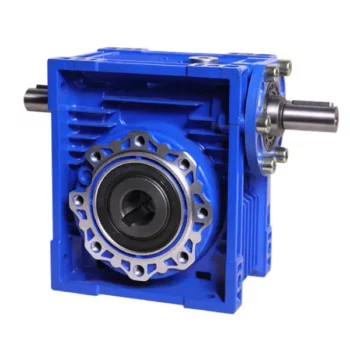
Can a Worm Gearbox be Used for High-Speed Applications?
Worm gearboxes are generally not recommended for high-speed applications due to their inherent design characteristics. Here’s why:
- Efficiency: Worm gearboxes tend to have lower efficiency compared to other gearbox types, which means they can generate more heat and experience more energy loss at high speeds.
- Heat Generation: The sliding contact between the worm and worm wheel in a worm gearbox can lead to significant friction and heat generation, especially at high speeds. This heat can cause thermal expansion, affecting the gearbox’s performance and longevity.
- Wear and Noise: High speeds can exacerbate wear and noise issues in worm gearboxes. Increased friction and wear can lead to faster degradation of components, resulting in reduced lifespan and increased maintenance needs.
- Backlash: Worm gearboxes may have higher backlash compared to other gearbox types, which can impact precision and accuracy in high-speed applications.
While worm gearboxes are more commonly used in applications requiring high torque and moderate speeds, they may not be the best choice for high-speed scenarios. If high-speed operation is a requirement, other gearbox types such as helical, spur, or planetary gearboxes are often better suited due to their higher efficiency, lower heat generation, and reduced wear at elevated speeds.
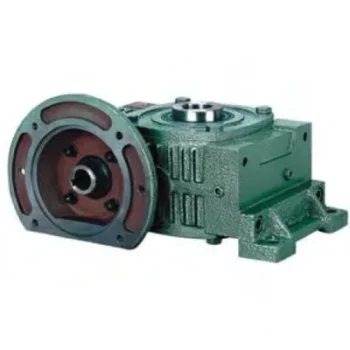
Worm Gearboxes in Conveyor Systems: Benefits and Considerations
Worm gearboxes play a crucial role in conveyor systems, offering several benefits and considerations for their effective integration:
- Space Efficiency: Worm gearboxes have a compact design, making them suitable for applications with limited space, such as conveyor systems.
- High Reduction Ratios: Worm gearboxes can achieve high reduction ratios in a single stage, allowing for slower conveyor speeds without sacrificing torque.
- Self-Locking: Worm gearboxes have inherent self-locking properties, preventing the conveyor from moving when the motor is not actively driving it.
- Directional Control: Worm gearboxes facilitate directional control, enabling the conveyor to move forward or reverse as needed.
- Low Noise: Worm gearboxes often produce lower noise levels compared to other gearbox types, contributing to quieter conveyor operation.
However, there are also considerations to keep in mind when using worm gearboxes in conveyor systems:
- Efficiency: Worm gearboxes may have lower mechanical efficiency compared to some other gearbox types, leading to energy losses.
- Heat Generation: Worm gearboxes can generate more heat due to sliding contact between the worm and gear, necessitating proper cooling mechanisms.
- Lubrication: Proper lubrication is critical to prevent wear and ensure efficient operation. Regular maintenance is required to monitor lubrication levels.
- Load and Speed: Worm gearboxes are well-suited for applications with high torque and low to moderate speed requirements. They may not be optimal for high-speed conveyors.
Before integrating a worm gearbox into a conveyor system, it’s important to carefully consider the specific requirements of the application, including load, speed, space constraints, and efficiency needs. Consulting with gearbox experts and manufacturers can help ensure the right choice for the conveyor’s performance and longevity.
Can a Worm Gearbox Provide High Torque Output?
Yes, a worm gearbox is capable of providing high torque output due to its unique design and principle of operation. Worm gears are known for their high torque multiplication capabilities, making them suitable for applications that require significant torque transfer.
The torque output of a worm gearbox is influenced by several factors:
- Lead Angle: The lead angle of the worm affects the mechanical advantage of the gear system. A larger lead angle can result in higher torque output.
- Worm Diameter: A larger diameter worm can offer increased torque output as it provides more contact area with the gear.
- Gear Ratio: The gear ratio between the worm and the gear determines the torque multiplication factor. A higher gear ratio leads to higher torque output.
- Lubrication: Proper lubrication is essential to minimize friction and ensure efficient torque transmission.
- Material and Quality: High-quality materials and precision manufacturing contribute to the gearbox’s ability to handle high torque loads.
Due to their ability to provide high torque output in a compact form factor, worm gearboxes are commonly used in various industrial applications, including heavy machinery, construction equipment, conveyor systems, and more.


editor by CX 2024-01-09